There are three things about Mauricio Pochettino that ought to excite Manchester United supporters.
First and foremost his bold and expansive style of football fits the “attack, attack, attack” mantra that has rung around Old Trafford across the generations.
Second, Pochettino has a Premier League pedigree that no Man Utd manager since Jose Mourinho can match.
And third, his history developing young players follows the club’s proud tradition, from the Busby Babes to the Class of '92.
Pochettino's role in development of numerous Premier League stars
Pochettino's career in England began on the south coast and he took Southampton from relegation candidates to an impressive eighth-place finish in 2013/14 (where a young Luke Shaw starred) before embarking on a five-and-a-half-year spell at Tottenham Hotspur memorable for two title challenges (including a runners-up finish in 2017/18) and a UEFA Champions League final appearance in 2019.
Harry Kane and Son Heung-min, both young players at the time, developed into two of the best forwards in the world under Pochettino, while youngsters Danny Rose, Kyle Walker, and Dele Alli also flourished.
Following a spell with Paris Saint-Germain in France, Pochettino led a youthful Chelsea side to sixth in 2023/24 (improving on their 12th-place finish the year before), a campaign most notable for breakout star Cole Palmer accruing 33 league goal involvements, to this day his personal best.
Pochettino’s distinctive attacking style stood out in all three roles, as did his investment in young players. Both qualities reflect the values of Manchester United, from Sir Matt Busby in the 1950s and 1960s through to Sir Alex Ferguson.
How do Pochettino teams play?
Inspired by his mentor Marcelo Bielsa - the ex-Leeds United manager famous for inventing a style of high-octane play - Pochettino coaches intense pressing and fast attacking football.
In a 4-2-3-1 formation, he likes athleticism in central midfielders who help get the best out of a free-roaming No 10, while wingers tend to invert into the middle and width is achieved via extremely aggressive overlapping full-backs.
Pochettino teams like to take risks by passing carefully out from the back, inviting pressure in order to quickly spin around the on-rushing opponent and attack at high speed in vertical lines.
High possession stats are inevitable, given that Pochettino coaches player movements in fine-tuned detail, but he differs from someone like Pep Guardiola, who wants to maintain a disciplined shape to create slow and orderly passing moves.
Watch: Pochettino's BEST touchline reactions
For evidence of this, we can isolate Spurs’ best period under Pochettino, 2015-2018 (when Spurs finished third, second, and third), and see that in key metrics pertaining to intense pressing, and fast and direct attacking football, Pochettino’s side ranked among the best:
Pochettino's Spurs v PL rivals, 2015-18
Stat Total PL rank PPDA (per-90) 9.0 2nd High turnovers 801 4th Fast breaks 53 2nd Goals 229 2nd
*PPDA = Passes per defensive action, a measure of pressing intensity
Pochettino will look to improve Man Utd's intensity
Some pundits are already highlighting the difference between Pochettino’s hard-running philosophy and Man Utd ranking 19th for distance covered this season (112.5km).
But it’s important to note that tactical preference impacts running (Michael Carrick didn’t instruct his players to press high) and the psychological effect of poor form can lessen intensity.
Pochettino will change all that. Historically he relies upon the sprightly energy of youth to enact his tactical ideas, which means we should see more of Kobbie Mainoo, Amad, Leny Yoro, Ayden Heaven, and Shea Lacey.
Seven members of the senior squad are aged 22 or younger, a good sign that Pochettino can change things quickly. In fact, the team might be surprisingly well-suited to his tactics.
Which players will benefit most from Pochettino’s tactics?
It isn’t just the young players who will benefit.
In defence, Pochettino’s preference for front-foot defending and applying high pressure means his compatriot Lisandro Martinez could become a leader again, while 21-year-old Yoro has untapped potential that Poch seems likely to discover.
The new United boss relies upon flying full-backs to provide attacking width – Walker and Rose were an iconic pair at Spurs – and this is one area Man Utd are short, requiring some outside-the-box thinking.
Shaw is reliable on the left, whereas on the right Pochettino could look to convert Amad, who played wing-back under Ruben Amorim. Amad is versatile, defensively intelligent, and, of course, lethal in the final third. It’s a bit left field, but it might just work.
In the middle, Mainoo has the press-resistant traits of a young Mousa Dembele, who excelled at Pochettino’s Spurs, and similarly Carlos Baleba has the qualities needed to evade pressure, weave through the lines when dribbling, and make risky forward passes to get United on the front foot fast.
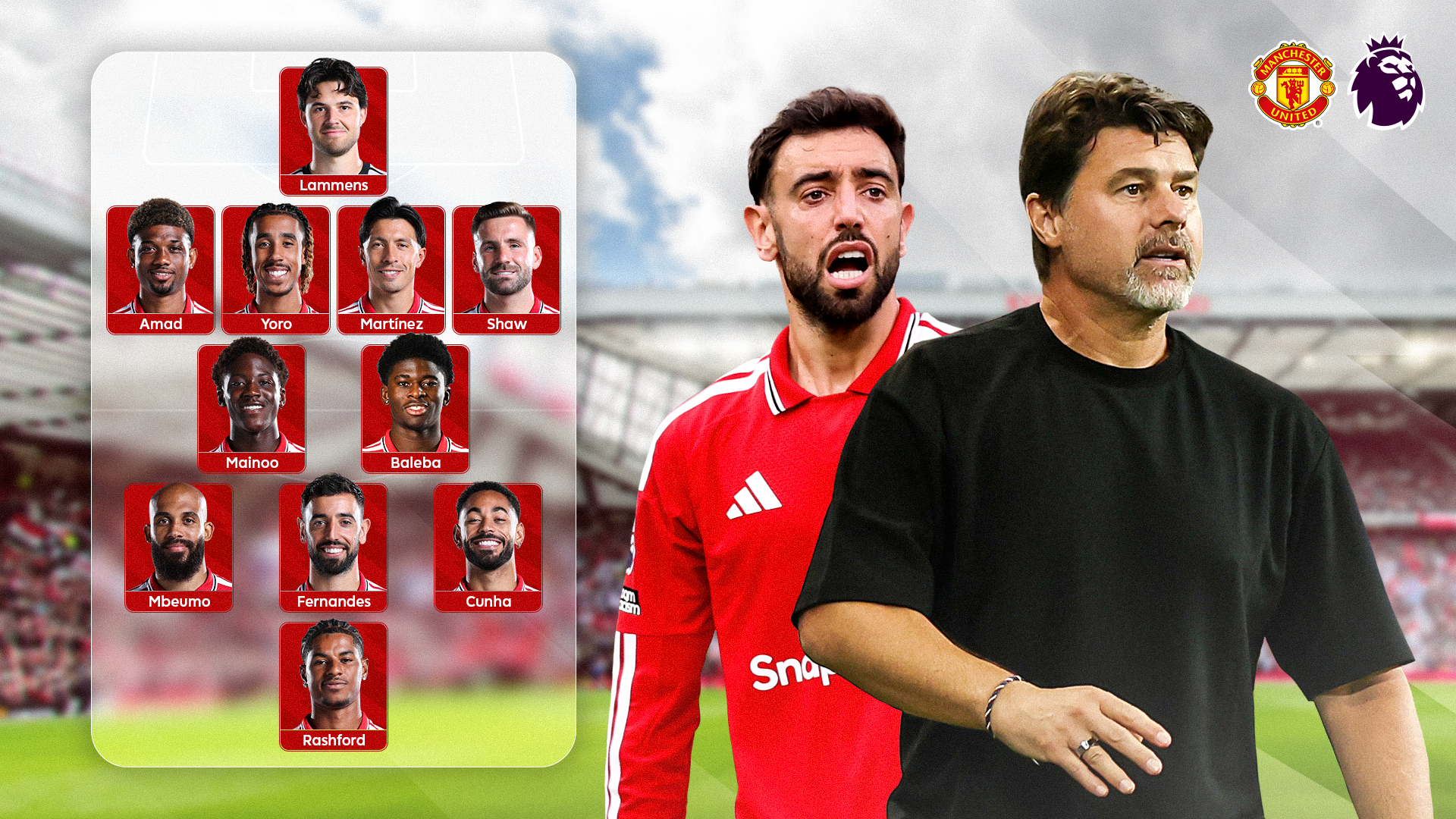
How Man Utd could line up under Pochettino
There should be no problem finding space for Bruno Fernandes to roam, given how good Dele was for Pochettino, while out wide, Bryan Mbeumo and Matheus Cunha – one direct runner, one quasi No 10 – again follows the pattern of Poch’s career, roughly equating to Christian Eriksen and Son at Spurs.
There is no Kane equivalent in this squad, but Pochettino will appreciate the high-intensity style of Marcus Rashford, a player, like Dele, whom Pochettino can put an arm around and maximise his talents.
With Man Utd 18th in the Premier League table, there are quite a few players who might need similar encouragement and could benefit from Pochettino’s famed warmth and relationship-building.
But more importantly, everyone connected with Man Utd - not least the fans - will benefit from high-adrenaline and youth-focused attacking football, aligning as it does so neatly with the club’s rich history.
That connection alone tells us Pochettino – experienced, tactically-minded, and trusting of young players – can succeed at Old Trafford.
Pochettino's first five Premier League fixtures