At the start of last season, Tottenham Hotspur were ranked by Englandâs leading soccer think tank as the âbest run clubâ across the nationâs entire pyramid. Less than two years later, they are staring down the barrel of a first relegation in almost half a century.
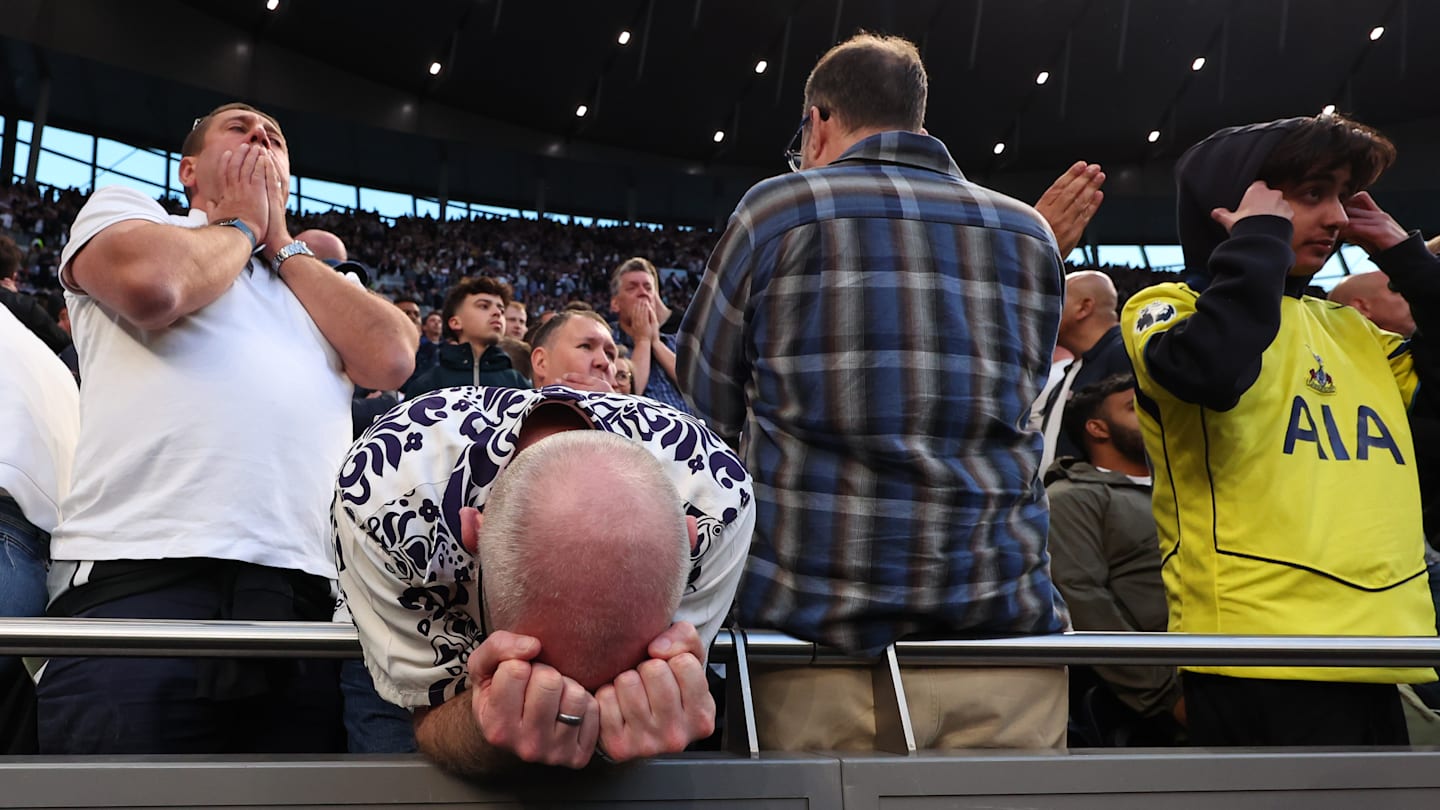
The prospect of this catastrophic demise is writ large across the faces of Tottenhamâs fans (and Xavi Simons) after each bungled result inches them closer to the drop. Yet, the most obvious impact of relegation will be spelled out in black, white and (mostly) red across the clubâs accounts.
The leading financial experts in the field estimate that Spurs stand to earn between $311â372 million (£230â275 million) less in the Championship compared to the current campaign, a staggering set of figures for a club which was once upheld as the height of efficiency. It has been a steepâand expensiveâdecline.
Breakdown of Tottenhamâs Estimated Revenue Drop
Data estimated by BBC Sport and Swiss Ramble. Converted from £ to $ at current rates.
According to the last set of released accounts, Tottenham posted the ninth highest revenue of any soccer club on the planet. That sum is only expected to increase when the current campaignâs figures are analyzedâthanks in no small part to the added financial bonus of a run to the Champions League last 16. That only gives Spurs a higher platform to dive from.
The club are set to take the biggest hit from broadcast revenue, with the Championship failing to offer anything near the riches afforded to the Premier Leagueâs swollen TV market.
Tottenham would benefit from parachute payments which are dolled out to relegated clubs, worth around $61 million, but that is a drop in the ocean compared to the sums they have been gobbling up for years. The EFL central distribution stands at a measly $6.8 million, whereas Spurs stand to earn $178 million from Premier League television money alone this term.
As a member of the âBig Fiveâ which spearheaded the formation of the Premier League in 1992 to open up these revenue streams, this is a particularly bitter pill to swallow.
Commercial income is also set to take a hit thanks to the clauses baked into contracts with the likes of Nike and AIA, who understandably expect to pay less to sponsor a team now competing in the Championship. This could be somewhere in the region of a 20% discount.
Fans will also expect some sort of financial compensation. A ticket to see Spurs play Arsenal in the Premier League can hardly cost the same as a clash with League One champions Lincoln City. It remains to be seen what prices Tottenham set, but total matchday income could fall by around 40%.
âI reckon itâs going to be somewhere in the region of £250 million to £275 million compared to the current season,â soccer finance expert Kieran Maguire predicted on The Sports Agent podcast earlier this month. âThatâs taking into consideration the fact that Spurs have the second highest yield in terms of how much they extract per fan, per match. Itâs a very sophisticated operation they have ... Then, of course, there wonât be the participation in Europe next season.â
Across the last two seasons, relegated clubs have suffered an average revenue drop of 41%, per Swiss Ramble. Yet, even with this expected drop-off, Spurs still stand to shatter the record revenue generated by any Championship club, comfortably surpassing the $185 million amassed by Leeds United during the 2024â25 campaign.
Costs Cut in the Championship
If Spurs stand to miss out on something in the region $340 million, they will have to find ways of making some of that back. Tottenham already recorded hefty losses last year and while the threat of breaching financial regulations is not realâmany of these deficits donât fall under the bracket of consideration for these pliable rulesâsome costs will have to be cut.
Numerous reports have claimed that one of Daniel Levyâs final acts as executive chairman was to insert a 50% wage cut clause into every playerâs contract in the event of relegation. Having finished 17th in the 2024â25 campaign, Spurs felt compelled to cover themselves. In the eyes of sports finance expert Professor Rob Wilson, it wasnât drastic enough.
âSome other clubs could even have 90% relegation clauses or agreements for players to move,â Wilson told The i. âBut because Spurs have been relatively stable in the Premier League, they donât have the clause they would need in order to properly survive.
âItâs nowhere near enough. You need a minimum 75% relegation clause in order to balance your books when you go down.â
In the event of demotion, Tottenhamâs wage bill would be slashed from around $374 million to $187 million. Yet, operational expenses are expected to remain highâthe cost of putting on a Championship game is very similar to its Premier League equivalentâeven if there is not the burden of hosting European fixtures.
Players will invariably have to be sold to make up the remaining deficit. The problem is that every club knows this, putting Spurs in a position of weakness entering each negotiation.
READ THE LATEST SOCCER NEWS, ANALYSIS AND INSIGHT FROM SI FC