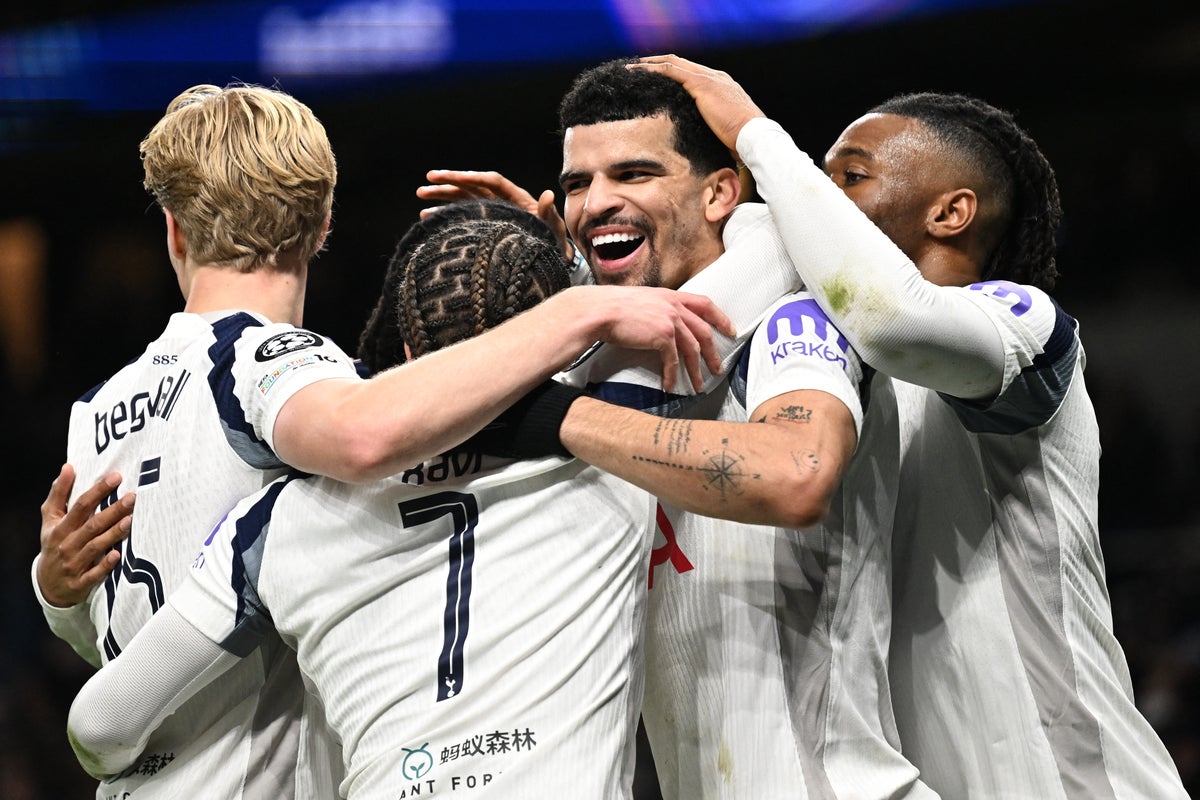
A win so convincing and uplifting that it’s hard to say where it came from. Maybe this is Thomas Frank showing some defiance, and what is possible when you finally have Dominic Solanke back scoring. Maybe this is what happens when you actually try to play on the front foot. Maybe a nadir had actually been reached against West Ham United, and this is the resolute response.
Maybe this just says something about how bad Borussia Dortmund were in a 2-0 that could have been 5-0, because they were pitiful - and that was even before Daniel Svensson’s unfortunate red card.
That still seems a touch uncharitable, since Spurs were clearly ready for something. The team actually played with life. The stadium finally enjoyed an occasion.
The board, meanwhile, can relax for the first time in weeks. This buys them space and time - and maybe yet, somehow, a direct place in the Champions League qualifiers.
They probably shouldn’t be too persuaded by one single win over a desperately disappointing Dortmund, but Frank has a right to smile.
The toxicity never came, except maybe in the apparent contagion of bad defending in the Dortmund defence.
Frank needed this, though. Solanke needed his goal, if for very different reasons given his long-term injury. All of that might point to a night where things start to come together, except that is immediately undermined by the reality that an away game to 19th-place Burnley on Saturday poses a much more significant and serious threat.
That’s for the rest of the week. For now, finally, Frank gets to smile about a performance. You could see it immediately after the game.
You could sense it from the off.
Dortmund just couldn’t cope with Spurs’ press. It was like so many recent Tottenham games, except with the team in white finally doing to another team what everyone has been doing to them.
Wilson Odebert was especially enjoying himself, and tearing at Dortmund in the way many love from such a winger. Niko Kovac’s side couldn’t stop him. It was his quick play - and thinking - that set Spurs on their way, an angled ball back in allowing Cristiano Romero to turn the ball in from close range.
The lead was no more than Spurs deserved.
Dortmund were so rattled that they were making the most basic errors, in defence, and in attack. Waldemer Anton was losing the ball at the edge of his own box, Karim Adiyimi was struggling to control it at the edge of Spurs’. And that was on one of the few moments when they actually got forward.
Spurs could really have been out of sight by the time of Daniel Svensson’s 24th-minute red card, even if Dortmund can reasonably say that stopped them having much chance of a comeback at a mere 1-0, and that it was highly debatable.
The challenge was one of those that looked a lot worse on the belated VAR replay, rather than in real-time.
Either way, the red card just fortified the pattern of the game: Spurs looking so much better.
Within 12 minutes, Solanke had got that goal, and made the game safe.
The temptation after games like this is to wonder how Dortmund would get on in the Premier League, and just how much extreme financial disparity is distorting European football.
Germany’s second biggest club, who currently lie second in the Bundesliga, looked far less physically robust than Bournemouth or Leeds United.
Spurs, meanwhile, are notionally one of the best sides in Europe’s premier ranking but also one of the most sorry and downbeat in England.
Except, the very recent history of the Champions League - not least Bodo Glimt’s win over Manchester City just an hour before - cautions against such debate, especially amid this phoney war stage.
Sure, automatic qualification places may have to be confirmed, but that will never have the same intensity as actual knock-out. There can be a passive feel to so many of these games, as if teams are just sort of lulled into the low-stakes mood.
The other side of that is, well, the business side of the competition. Dortmund have actually been in a Champions League final more recently than any English club, who have only claimed two trophies out of six.
There is an argument that the Premier League’s very wealth works against it for that point of the competition, as it fosters an exhausting competitive intensity not seen in other leagues.
Or, Dortmund might just have had a bad night, as Spurs finally had a good one.
Tottenham’s issues have not gone away. This quietened the toxic dissent of the last week, drowned out by the badly-needed sound of celebration, but there was still fan dissent over their senior concessions policy.
They still have to actually beat Burnley. Frank, at least, can finally point to the example of an encouraging performance.