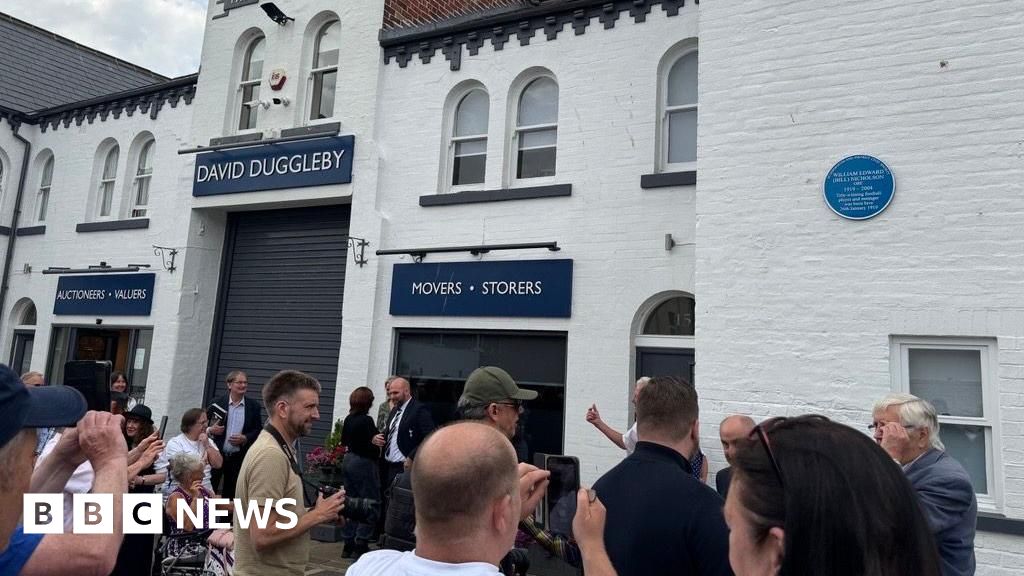
A blue plaque has been unveiled in Scarborough to commemorate the life of a Tottenham Hotspur and England footballer.
Nicholson joined Spurs in 1936, and later as manager led them to a historic double in the 1960-61 season. He played for England on 19 May 1951 when they took on Portugal - scoring with his first touch of the ball after only 19 seconds.
The plaque, unveiled by the Scarborough Civic Society, was sponsored by the Tottenham Hotspur Supporters' Trust, and follows a campaign from Scarborough-born Spurs fan Jack Kirby-Lowe to have Nicholson recognised as part of the town's heritage.
Society president Adrian Perry said: "Spurs absolutely blossomed under his management and direction. It was just a career of success.
"We've got many other Scarborough people that have had just as glittering careers, and they all started out in Scarborough."
Representatives from the Tottenham Hotspur Supporters' Trust and Nicholson's daughters Jean Bell and Linda Feldeisen attended the unveiling of the plaque at his birthplace - now the site of David Duggleby Auctioneers.
Feldeisen, who now lives in Boston in the US, said being back in Scarborough had brought back fond memories of building sandcastles and playing cricket on the beach with her dad.
"It's an honour and a privilege to be here," she said.
"We're really excited about the plaque. I think it will give a lasting memory of Dad for people.
"He was a very loving dad. He didn't want any of the limelight.
"Once when we went to see a film in London - the line for his autograph was longer than the line for the ice cream.
"After that he didn't want to go to pubs or anywhere like that, he just wanted to be Bill outside of the Spurs life, and just be with his family."
Kirby-Lowe, who now lives in London, said he was surprised to find Nicholson missing from the blue plaques in Scarborough.
"It surprised me that such a notable figure in the nation's favourite game hadn't been commemorated in his home town, so I got in touch with the civic society."
He was later taken on as ground staff before playing his first professional match two years later, aged 19.
After serving in the Durham Light Infantry during World War Two he returned to Spurs in 1946, going on to manage the team.