After flirting with relegation in the past two seasons, Tottenham have made a statement of intent.
They are set to break their club-record transfer fee for the second time in a matter of days, taking their summer spending to £237m - their previous biggest outlay across one season is £235.8m (2023-24) - and there could be more to come.
Spurs' owners are determined to turn the tide and show they remain a 'big six' club.
That term was coined not just because of on-field success, with those clubs - Spurs, Arsenal, Chelsea, Liverpool, Manchester City and Manchester United - having dominated the upper echelons of the Premier League table over the past 15 years.
It was also because of their income. The big six simply generate a higher amount of revenue than the rest of the Premier League clubs.
That has allowed them to out-spend their rivals, and Tottenham are to invest more than ever before in their first-team squad.
After completing a £52m move for Jan Paul van Hecke from Brighton, they signed Mateus Fernandes for a club-record £85m on Thursday from relegated West Ham. They have also agreed a deal with Newcastle for Sandro Tonali worth up to £100m.
Spurs have finished 17th - one place above the relegation zone - in each of the past two seasons.
There is now a clear desire from Tottenham's owners and club hierarchy to make statement signings. They also want to spend early in the transfer window and decisively.
And new spending rules, higher revenues, owner cash injections, and freeing up more money to spend on wages are enabling the club to make that desire a reality - with the potential for a further £250m to be spent this summer.
Tonali was the top midfield target for local rivals Arsenal but the reigning Premier League champions found the asking price prohibitive, while Spurs also beat off competition from Manchester United for Fernandes.
The change in Tottenham's transfer policy began with Daniel Levy ending his near 25-year reign as executive chairman in September.
In an open letter in May, new chairman Peter Charrington said that last September the club "recognised that something seismic had to change".
"What has been put in motion is real, and it marks a genuine break from what had come before," he added.
"We must be in the fight with the best teams in this league, every season, and we are rebuilding this club with that standard in mind."
Investment group Enic, which is run by the Lewis Family Trust and is the club's majority shareholder with 86.58%, "authorised a full reset".
For the second time in 10 months, it has injected £100m into the club, via the purchase of new shares in Enic.
The group has also restructured the club's leadership. Vinai Venkatesham became chief executive in April 2025 while Johan Lange was promoted to co-sporting director alongside Fabio Paratici, who then left the club in January.
Spurs were keen to continue with a co-sporting director model and Sebastien Kehl was close to replacing Paratici after leaving Borussia Dortmund but a deal fell through, leaving head coach Roberto de Zerbi with greater power in terms of recruitment.
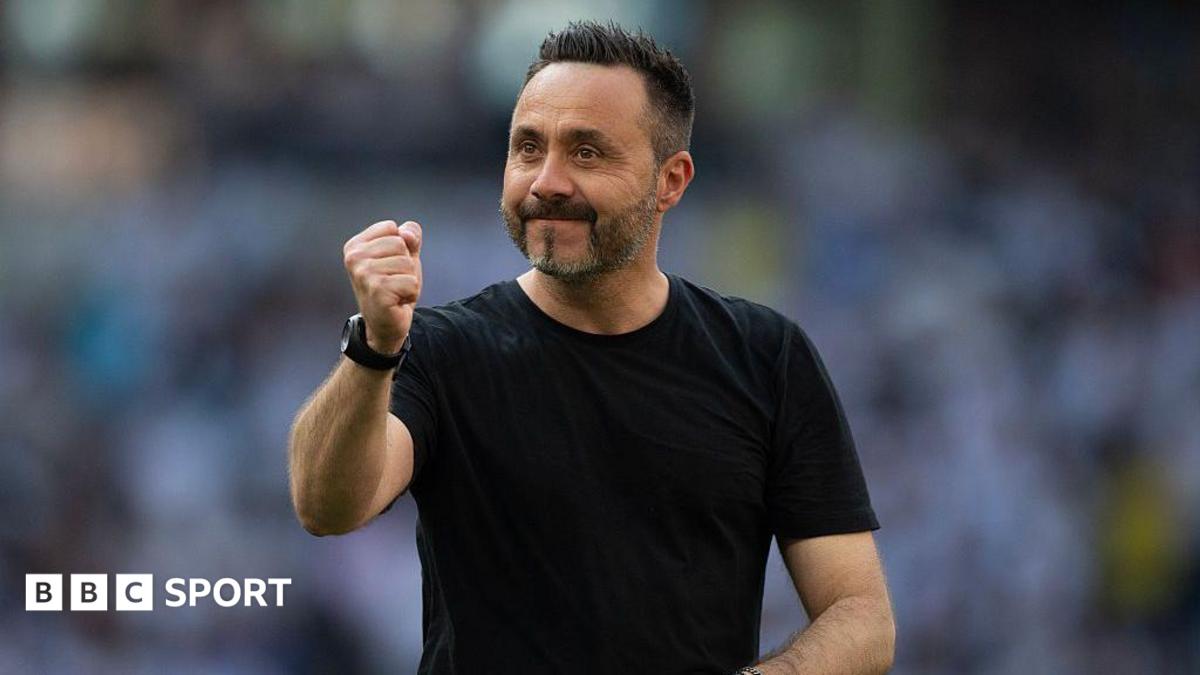
While Thomas Frank and Igor Tudor had brief spells as manager last season, De Zerbi was appointed on a five-year deal in March and ensured Spurs avoided relegation.
After beating Everton to secure their survival on the final day of the season, the former Brighton boss suggested a need for the club to have a busy transfer window when he said: "We have 10, 11, 12 players good enough to stay."
Fernandes is his fifth signing of the summer so far, after goalkeeper Martin Dubravka plus defenders Marcos Senesi, Andy Robertson and Van Hecke.
The latter is a player De Zerbi knows well as he played under him at Brighton, while the Italian coach is a long-time admirer of compatriot Tonali.
There has been a clear drive from the club's ownership to recruit players with experience and leadership. Although Fernandes is 21, both Lange and De Zerbi highlighted his intelligence and maturity when the club announced his arrival.
Robertson, 32, won all major honours with Liverpool and has just captained Scotland at the World Cup, while Senesi, 29, gained four years of Premier League experience at Bournemouth.
The pursuits of Fernandes and Tonali, both players who have been targeted by Tottenham's big-six rivals, shows that Spurs have increased the squad's wage ceiling, which under Levy had proved prohibitive to attracting elite players.
As part of their new trading model, there is also a remit to improve at generating money from player sales.
That is demonstrated by Brighton's £46m move for defender Luka Vuskovic, a 19-year-old who is yet to play in the Premier League and spent last season on loan at German Bundesliga side Hamburg.
Vuskovic is unlikely to be the last player to leave this summer and further sales will help Spurs to reinvest in other areas of the squad which require improvement, with De Zerbi keen to add reinforcements in attack.
Football finance expert Kieran Maguire
Tottenham can spend significant sums because under the new squad-cost ratio rules (SCR) they are allowed to spend up to 85% of their revenue on player costs - player wages, amortisation and agent fees etc.
In their last set of accounts (2024-25), wages and amortisation was only 61%, and this includes all salaries. Clubs do not separate between playing and non-playing staff, although Uefa says that normally about 75% of total wage costs go towards a club's first team.
In addition, Tottenham's new stadium, which can now host up to 30 non-football events a year at full capacity, is proving to be very beneficial.
At their old White Hart Lane ground, annual matchday revenue was £45m and commercial income - which includes concerts and NFL games - was £73m.
At the new stadium those figures were £126m and £277m, respectively, in 2024-25. The additional money coming into the club allows it to spend more under the SCR regime.
While the club has spent a lot of money this summer to date, transfer fees are amortised over the length of the contract, but limited to five years, so a £240m spend this summer equates to a £48m amortisation fee.
Tottenham's total revenue for 2024-25 was £565m. Under SCR rules they would be able to spend up to £480m a year on their squad.