The Guardian
The unprovoked verbal abuse was not unexpected when it happened. Asian fans were gathering outside of the Tottenham Hotspur Stadium, many of whom had been introduced to Spurs through Son Heung-min, the beloved South Korean superstar.
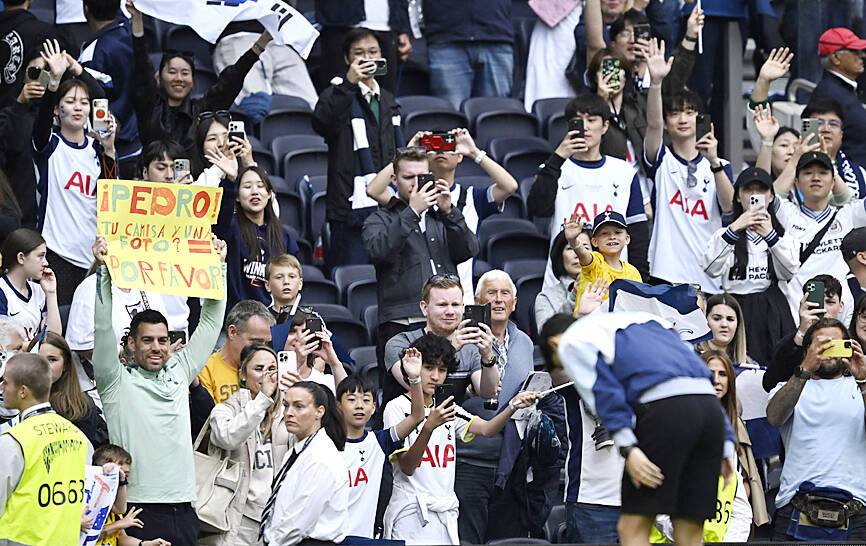
When Son was appointed captain in 2023, he became the first Asian player to lead a Premier League team, a boost not only for his already significant profile, but that of Tottenham. For more than a decade, he brought a flow of Asian fans to Spurs matches. And despite his departure in August to Major League Soccer’s Los Angeles, they are still coming.
They will be Spurs supporters for life, said Sun Thaicharoenporn, a 22-year-old Singaporean of Thai heritage who lives in London.
He and his girlfriend, Ang Ang, turned up for the game against Aston Villa this month decked out in club scarves and caps. They flashed big smiles and happily posed when we took their photos outside the stadium.
Then a Villa fan, among a group of men, interrupted.
“Fuck Tottenham,” he yelled, leaning into their faces.
Sun and Ang Ang blanched, but brushed it off.
However, the question lingered, unspoken: Would he have done that to other Tottenham fans? Would he have so confidently targeted a group of white men wearing Spurs colors, not Asian fans, stereotyped as more passive and timid, and maligned at times even by other Spurs fans online for being on the bandwagon, for not being “true” fans.
Who gets to be a fan in English soccer, to fully participate in club culture, to feel they are part of a club? Son made a lot of people feel they could.
When Sun moved to London three years ago for university, he told his girlfriend he wanted them to get into soccer and get behind a club, to participate in English culture and help them “integrate.” Tottenham were the clear choice. He had been following the team casually for years because of Son.
“When I was in middle school he was the main Asian representation in the Premier League,” he said.
Sun’s family were Liverpool or Manchester United fans.
“I’m the black sheep,” he said wryly. “But I felt like I wanted to support a team which represented that kind of multidiversity.”
To him Son’s presence in the Spurs team, his selection as captain, made him feel Tottenham were a more tolerant, open club than others.
“As an Asian person coming to the UK, you know you’re a minority, and Son’s presence, his leadership, sort of signifies that this club at least knows how to handle multidiversity and they want to embrace that. So I feel more safe going to the stadium and being part of the fans, being part of the club.”
Son is a “cultural touchstone” for Koreans around the world, New Yorkers Mike and Paul Chung said.
The brothers made a Spurs game a key part of their itinerary when they flew to London and Mike Chung wore Son’s No. 7 shirt for the occasion.
“He validates the idea that a Korean can be one of the best players for the most popular sport in the world,” he said
The support that Son, and by association Tottenham and the Premier League, received in and from Asia over the past decade was massive, and measurably so. Visitors spent their dollars and stall owners around the stadium still report selling out Son scarves after a big game.
However, resentment among some Spurs fans at ticket prices going up, the difficulty of procuring them and their team being regarded as a tourist attraction affects Asian fans.
Austen Chan, who grew up “religiously” watching Tottenham in Hong Kong, said he has seen a lot of such abuse “not so much in person at the games, but online.”
He has seen accusations that Korean fans who fly in for the games are only there for Son, taking up the spots of “legitimate” fans.
“I don’t think being from a different part of the world makes you any less of a Tottenham fan,” he said. “I may not have been able to go to games while I was in high school because I just was not in the same place, obviously. But I think the fact that I was willing to stay up till those early hours to watch the games shows that I’m just as much of a fan as any other person.”