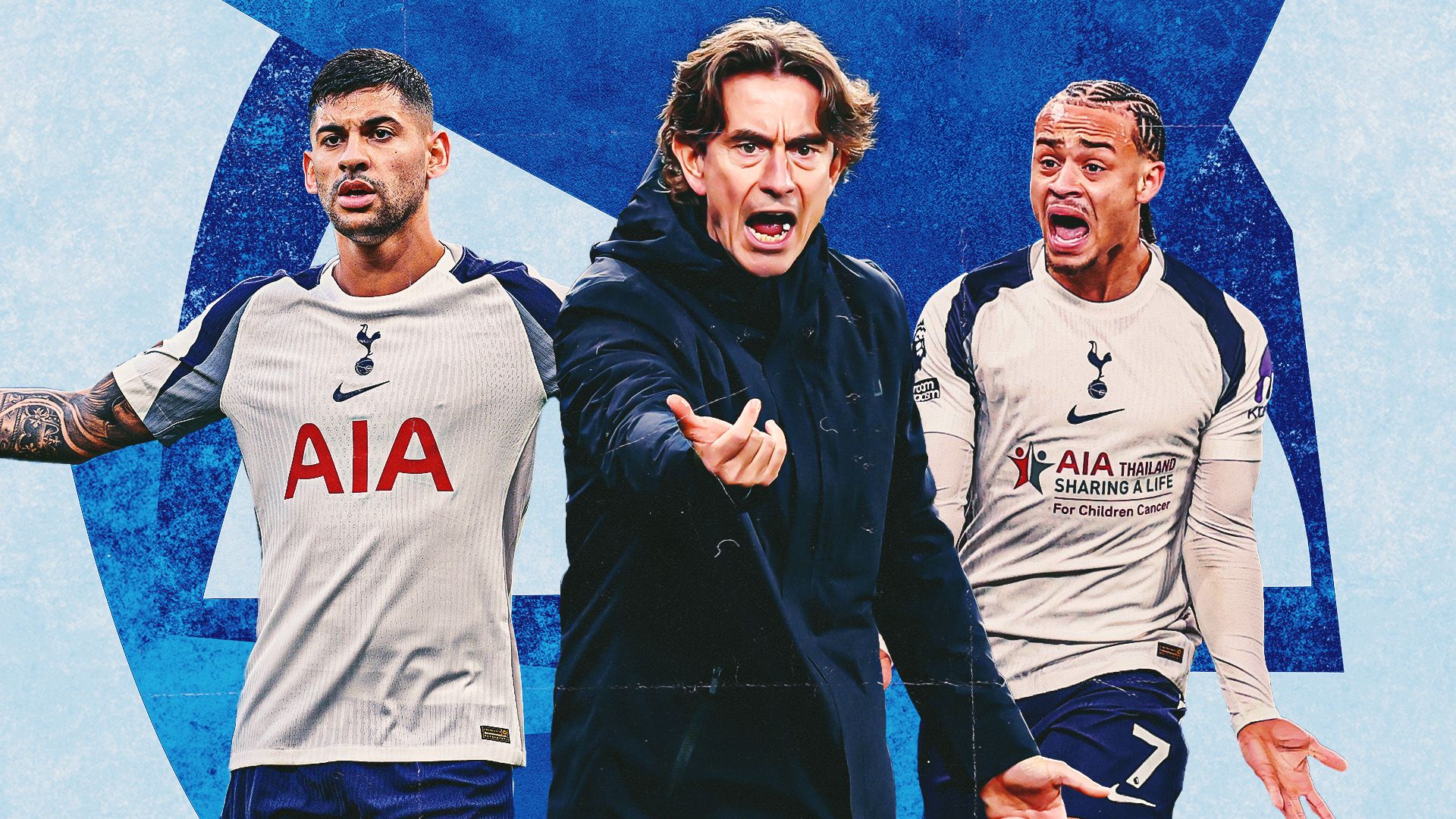
Though Tottenham do not have the weight of recent trophy wins to assert their authority, they have consistently battled for European spots in the 21st century, playing in the Champions League in seven seasons, a tally only bettered by the other 'big six' sides since its 1992 makeover. Spurs were also one of the defining English sides of the 20th century, known for being a cup team and playing with an attacking style, even if it bordered on naivety. Fans were mostly accepting of that trade-off.
The club boast one of the finest football-specific training grounds in the world, having moved from the diminutive Spurs Lodge to the world-class site of Hotspur Way in 2012. There isn't a whim that can't be satisfied among their staff. In 2019, they inaugurated their new billion-pound new stadium, which is one of the finest in the sport and boasts a formidable, head-splitting atmosphere when the mood is right. It just doesn't feel that way coming off the back of calendar year which saw the club record its fewest home league wins since 1915, midway through World War I (this cannot be stressed enough).
When owners ENIC took majority control of Tottenham in 2001 and appointed Daniel Levy, a boyhood Spurs fan, as chairman, they quickly sought to dramatically improve the club's infrastructure. They located a plot of land between the Enfield suburbs and London's orbital M25 motorway for the training ground, and with space to build a stadium at a premium in the capital, swiftly bought property surrounding their White Hart Lane site. It was always their intention to maximise potential off the pitch in the hope it would, directly or indirectly, correlate to success on it. That was the plan, anyway.
In the first half of Levy's 24-year premiership, Spurs re-established themselves as a destination for budding talent. Buy low, sell high, but without the 'moneyball' moniker. Sceptics of this approach claimed this was a way for ENIC, an investment company after all, to maximise profit rather than focus on challenging for honours. But ultimately, both before and after the introduction of the Premier League's first set of Financial Fair Play rules, Tottenham weren't rich or attractive enough to bring in players to immediately pose a threat to the old 'big four', consisting of Arsenal, Chelsea, Liverpool and United. City only joined the party after the Abu Dhabi Group takeover of 2008, though Spurs joined the party organically with their model, strategy and a slice of luck.
It would take another five years for Spurs to play in Europe's top club competition again, but by that point they had built a new core of top talent. Christian Eriksen, a prodigy at Ajax, arrived for a measly £11.5m and was the only undoubted success story of the seven players brought in with the money raised from Bale's world-record sale to Real Madrid. Dele Alli, at the recommendation of legendary club scout David Pleat, came from League One side Milton Keynes Dons for £5m. The boat was pushed out a tad further for £22m Son Heung-min at Bayer Leverkusen. And, of course, Harry Kane went from meme material to the greatest player in Spurs' modern history within a matter of seasons. Together, they were known affectionately by fans as 'DESK'.
This foursome was surrounded by other stars such as France captain Hugo Lloris, Belgian defenders Toby Alderweireld and Jan Vertonghen, dynamic full-backs Kyle Walker and Danny Rose, and a one-man midfield in Mousa Dembele. Together, this side finished in the top four for four successive seasons - a feat only bettered by the team of 1959 to 1964 - finished with the club's all-time record of 86 top-flight points over a single season and, most famously, reached the 2019 Champions League final in dramatic circumstances, only falling to a Liverpool team who were clearly head and shoulders the best team in Europe.
Post-final loss, Eriksen stated his desire for a new challenge and eventually left for Inter in January 2020. Dele failed to overcome a string of injury problems and was sold two years after the Dane's exit, joining Everton. Kane and Son remained, but were surrounded by infinitely inferior players to those they had grown into their respective primes with, having to carry the team during their own final seasons at the club.
On the eve of the Champions League final, Pochettino confirmed he would stand down as manager if Spurs were victorious, believing his work to be complete. In truth, admission of this was the ultimate signal that he was flagging and on the way out sooner or later. There was uproar when he was sacked a few months later, but there was at least enough reason behind that decision. Tottenham started 2019-20 poorly and weren't playing with anywhere near the same trademark intensity of previous seasons. What didn't make sense was Levy's sudden pivot in strategy.
Believing the squad to be closer to winning the most important of trophies than they actually were - despite making only four signings over the last two years and the team still visibly exhausted - Levy completed a long-held ambition of hiring Jose Mourinho, claiming the declining ex-Chelsea and Manchester United boss was at that point 'one of the two best managers in the world', even when it was clear to the rest of the world this was no longer the case.
Tactical reservations over Mourinho aside, the 'Special One' was also used to working with massive budgets that dwarfed the competition. Tottenham, despite the stadium move, couldn't quite promise the same yet. In his sole summer transfer window as head coach, Spurs signed Matt Doherty, Pierre-Emile Hojbjerg, Sergio Reguilon, Joe Rodon and Joe Hart. Bale also returned on a season-long loan, though judging by how infrequently he played under Mourinho, is regarded in hindsight as a Levy-led signing. After leading the table early in 2020-21, the Portuguese was sacked in April of that season with the team in seventh and only six days from playing in the Carabao Cup final.
Mourinho's failure was entirely predictable, yet the club did not learn from their mistakes. They were forced to settle on Nuno Espirito Santo as his replacement after over two months of trying to find a successor, only to sack him after 17 games when their top target, Antonio Conte, was open to working again.
Though Conte is often put in the same bracket as Mourinho by Spurs fans, he did enjoy initial success, leading the team to an unlikely top-four finish at the expense of Arsenal. Heading into the summer of 2022-23, it was Tottenham who were expected to become title challengers, not their north London rivals.
Alas, it was a familiar story. Spurs bought poorly, didn't add enough quality to surround Kane and Son, and towards the end of a testing season which also saw several tragedies in his personal life, Conte effectively quit by targeting all corners of the club in an explosive press conference. That summer, Kane was sold to Bayern Munich after refusing to sign a new contract, and you could hardly blame him.
Kane's departure hit Spurs hard, though only after a latency period. Ange Postecoglou successfully managed to lift spirits in N17 after taking the reins, quickly creating a sense of unity while getting off to an incredible start of eight wins and two draws from 10 Premier League games, all while playing an exciting brand of front-foot football.
Once the rest of the league figured out Postecoglou's tactics though, Spurs became incredibly one dimensional and couldn't lean on individual quality to bail them out in the same way as before. Son, who was appointed captain, was on a downward slope physically even if he was putting up impressive numbers, while Tottenham only signed a striker one year after Kane's departure, parting with £60m to bring in Dominic Solanke from Bournemouth. He was the only non-teenager signed in time for the 2024-25 season, with youngsters Archie Gray, Lucas Bergvall and Wilson Odobert their only other arrivals when the squad was crying out for leadership and ready-made options.
It is not only that Spurs have misjudged their needs in the market. As reported by finance expert Swiss Ramble, their wage-to-turnover ratio of 42 per cent was the lowest in the Premier League for the last financial year. Only one other side, Luton Town, who are now in League One, had a percentage below 50. Tottenham isn't as popular a destination for top-line talent just because of the club's relative lack of tangible glory, but also due to their seeming unwillingness to pay a premium for better players.
When Levy was at the helm, the overriding feeling was he had to win every negotiation. If he did not feel great about a deal, it probably wasn't worth doing. Even when a sporting director was in charge of transfers, he still had to find a way to be involved.
This is all before you examine the list of Spurs' most expensive signings and question what their scouts have been watching. Sixty-million-pounds on each of Solanke, Richarlison and Tanguy Ndombele lead the way. Only this summer did they break the mould to bring in Mohammed Kudus and Xavi Simons for a combined £106m, but neither of them have particularly set the world alight yet either.
Tottenham's powerbrokers were supremely unpopular with supporters long before the club decided to remove Levy from his post in September. For many years, Spurs have been among the country's most expensive clubs when it comes ticket prices, which was more palatable under Pochettino when the team appeared to be going places. You can't get away with it when the product is rubbish and simply not winning enough games, especially at home.
Many of Levy and ENIC's supporters changed allegiances during the Super League fiasco of 2021. Fans of Tottenham were equally as bemused as rivals when they managed to worm their way onto the list of 12 breakaway clubs.
With the appointment of Vinai Venkatesham, formerly of Arsenal no less, as CEO earlier this year and Levy's subsequent exit, the club have been trying to paint the image of a new era unfolding. But ENIC remain the majority owners. In front of them, the controlling Lewis family have suddenly emerged as a forward-facing entity, with The Athletic reporting they want 'more wins, more often'. In October, they pumped £100m of new capital into the club, supposedly setting up a busy January transfer window. There's no real evidence yet to suggest this is more than a change of face, though.
Lower down the hierarchy, sporting director Johan Lange has taken a backseat to the returning Fabio Paratici, rehired by the club after his 30-month ban from football for financial offences with Juventus expired. It's dubious how two people of such power can coexist anyway, but they may not even get to work together for a single transfer window, with Fiorentina desperate to bring Paratici back to Italy. There isn't any stability at any level at the club right now.
Venkatesham and Levy, when still in post, made a big song and dance about how Thomas Frank was the ideal person to replace Postecoglou as head coach last summer. The Australian was brutally sacked after ending the club's 17-year wait for a trophy, winning the Europa League in May. Given Spurs had finished 17th in the Premier League, this was an understandable move and one lacking in emotion that club executives should be paid to make. But Frank's struggles thus far will bring scrutiny back on the people upstairs.
This iteration of Spurs are dull to watch and increasingly self-destructive. The step up from Brentford may well be too much for Frank and he is not popular among fans at all, with many calling for him to be sacked already. Whereas he was a messiah at the Bees, Frank was starting from scratch at Tottenham in a far more intense spotlight and has cracked under pressure on several occasions so far, notoriously calling out disgruntled fans for the atmosphere generated during some of their many, many home losses this year. He's been dealt a bad hand, but still played it badly.
From 17th last season to 13th now, there are also concerns about the true level of this squad that has been assembled, which can't hold a candle to those even from the Mourinho, Nuno and Conte eras.
Tottenham have slid back into mid-table mediocrity, and in a Premier League with more parity than ever, who knows when they will even be able to stop it. Maybe they won't and, after only being saved by three awful promoted teams last season, they will actually sniff the danger of relegation in the coming years. They may be a Champions League team who won the Europa League only a few months ago, but Spurs are masquerading as the elite and won't get away with such fraudulent behaviour for much longer.