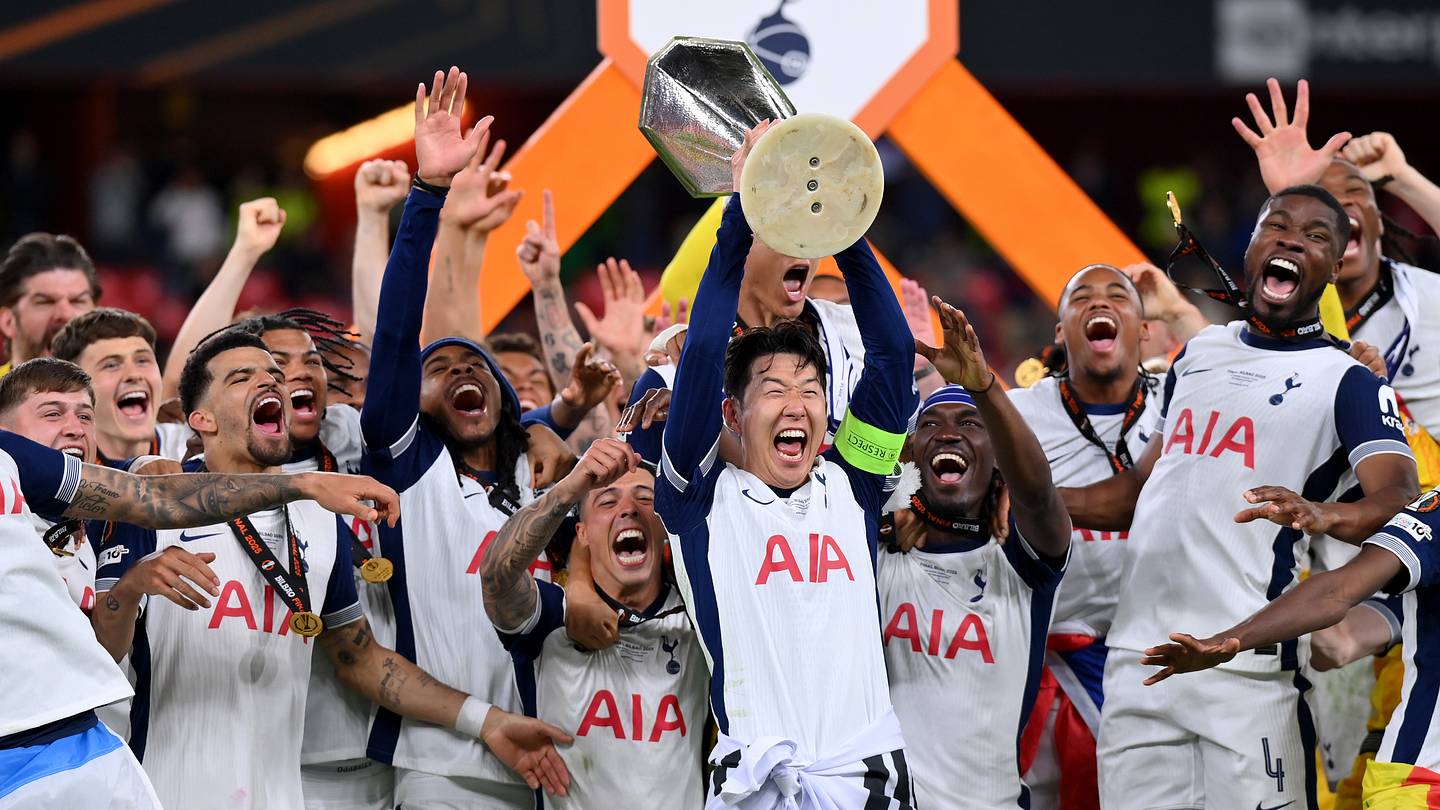
We awoke on Thursday morning a year on from one of the club's most glorious nights. Bilbao was supposed to be the launchpad for an era more prosperous, having broken a 17-year major trophy duck.
His methods deemed unsustainable, Ange Postecoglou was let go in favour of supposed floor-raiser Thomas Frank. The Dane's disastrous reign, one that was allowed to drag on for at least a month or two too long, has helped thrust Tottenham Hotspur into a stunning state of jeopardy.
We don't need to mull over the decisions and misfortune that have led to the current unbearable situation. Roberto De Zerbi's improved outfit require just a point on home soil against a slumping Everton on Sunday to stay in the Premier League. Defeat will open the door for West Ham United to pounce, whose back-to-back defeats meant we had the chance to all but secure our safety at Chelsea on Tuesday night.
But Spurs did what they almost always do at Stamford Bridge, and found a way to succumb. The following night, Aston Villa followed our success in Spain by thumping Freiburg 3-0 to win the 2026 Europa League.
Did their success in Istanbul take the shine of Spurs' triumph a year ago?
Concerning trend of Premier League dominance in Europe
Villa's cruise in the Turkish capital hasn't dispelled Tottenham supporters' Basque memories. We'll always have that occasion to look back upon with the utmost fondness.
In wider football discourse, though, there's undeniably a worrying pattern of Premier League supremacy. While Europe's premier divisions have each had their time in the sun, enjoying their own spells of superiority, the Premier League's emergence as the continent's dominant force is almost purely financial, and the gap between the rest of the continent's big leagues is only widening.
Since 2021, nine English clubs have been involved in a final of at least one of the three UEFA club competitions. We've now had back-to-back Europa League winners, and Crystal Palace could become the third Premier League club to win the Conference League in five editions.
At the apex, continental behemoths that trump the monetary might of England's wealthiest have been able to offer some resistance. Still, Arsenal have ground their way to this season's Champions League final, and there have been two English winners this decade.
So, in the grand scheme of things, Tottenham's Europa League victory seemingly arrived as a by-product of the Premier League's resource advantage over its competitors. Success on the continent has come to be expected, and the "greatest nights" in Bournemouth and Brighton & Hove Albion's respective histories are surely on the horizon.
UEFA's desire for expansion has ultimately diluted the Europa League's quality. While I was never a fan of Champions League teams dropping down after finishing third in the group, it did enliven the competition's knockout stages.
In that sense, Tottenham's triumph was doubtless less impressive than it would've been even five years before, but as I've already mentioned, that's for the neutral to mull over. N17 will shrug its shoulders.
We don't have to feel anything after Villa's return to glory. Well, other than the angst and agony as we wait for Sunday to arrive.