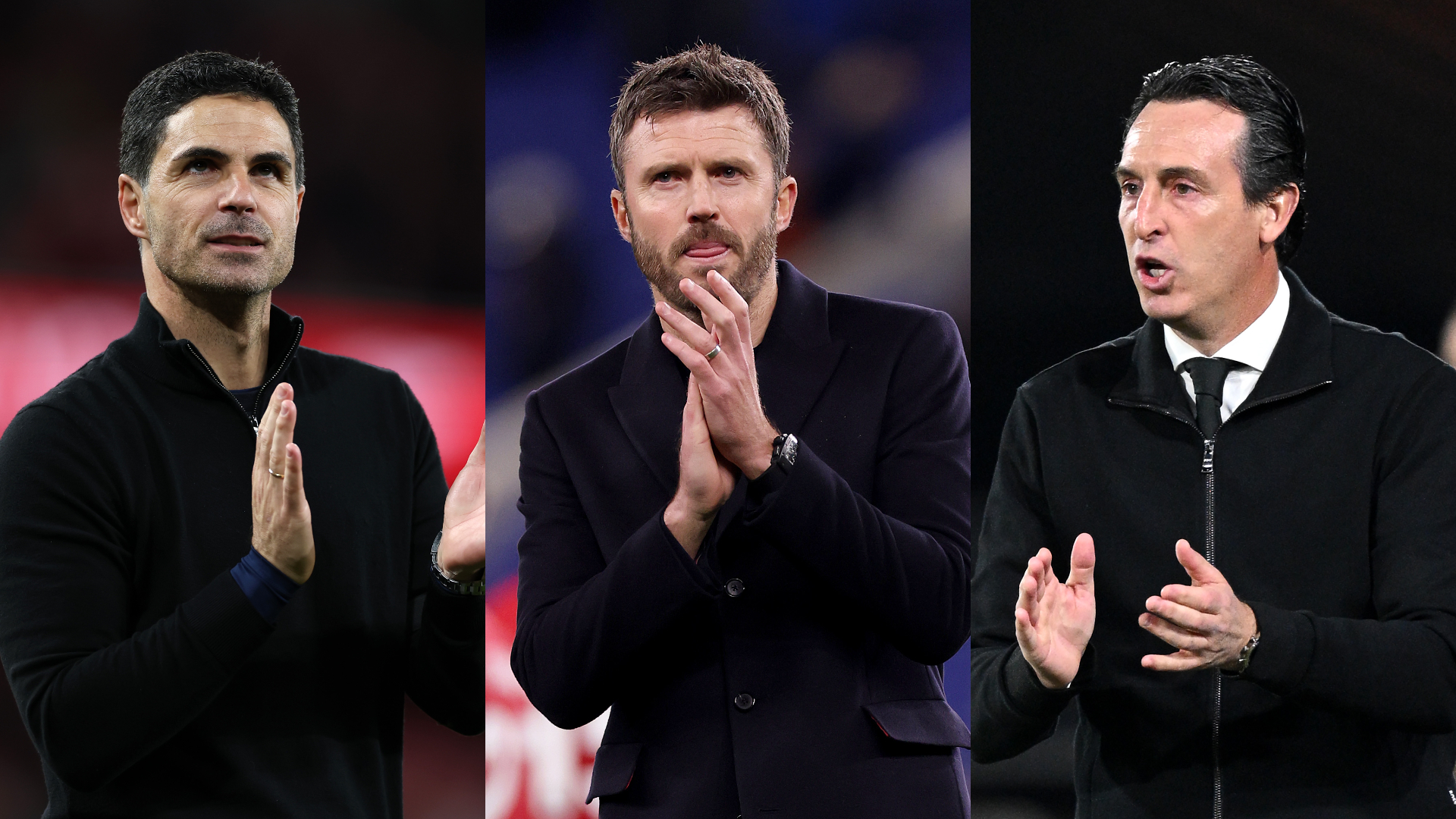
With the summer transfer window opening on Monday 15 June, football writer Alex Keble assesses each of the 20 Premier League clubs and the area each squad could strengthen with a new signing.
Arsenal – Direct left-winger
If Arsenal are to embrace their status as Premier League champions and “reach another level” by being “very ambitious, very fast and very smart,” as Mikel Arteta said after the UEFA Champions League final, they need to build an attack to match their world-leading defence.
The place to start is on the left wing, where only 33 per cent of their attacks were funnelled last season compared with 43 per cent down the right.
Arsenal's flank attacks 25/26
Arsenal are sometimes accused of playing too slowly in the final third, lacking directness or urgency outside of Bukayo Saka, and the stats agree.
The champions ranked eighth in the Premier League last season for take-ons attempted (700) and 10th for percentage of take-ons completed (38.9 per cent). A fast, dribbling left-winger could correct that.
Aston Villa – Creative No 10
Opta’s "Expected table", based on a team’s Expected Goals (xG) for and against, had Aston Villa all the way down in 12th, on 48.7 points, rather than their actual fourth. This discrepancy is explained by Villa’s remarkable tendency to score long-range goals.
Unai Emery’s side scored 14 goals from outside the box in 2025/26, helping them to outperform their xG by 7.8, the second-most in the division behind Tottenham Hotspur.
Aston Villa's goal map 25/26
While this is hugely impressive, and while Villa’s season-long form scoring screamers flies in the face of those who claim outperforming your xG is unsustainable, it suggests Villa could do with a player who has better accurate-passing creativity to create high-quality chances inside the box.
Bournemouth – Towering centre-back
It was a brilliant campaign for Bournemouth, which means little room for improvement, although a statistical deep dive tells us the Cherries need a new centre-back – and not just because Marcos Senesi left.
Bournemouth won 46.7 per cent of their aerial duels last season, the lowest figure in the Premier League after relegated Burnley. It might explain why Bournemouth conceded the highest xG from set-pieces in the division (18.3xG) and conceded the joint-second most goals from set-pieces (18).
When new head coach Marco Rose looks to replace Senesi, he will need to prioritise a commanding presence in the air.
Brentford – Consistent left-back
A magnificent first season for Keith Andrews was almost perfect, although there was one area that could improve, as evidenced by the fact the Brentford manager never quite settled on a first-choice left-back.
Rico Henry, Keane Lewis-Potter and Aaron Hickey alternated the role despite two of those players not being natural left-backs.
More quality in this position may be all it would have taken to win that one extra point Brentford needed to get into Europe: on the last day, Mohamed Salah had acres of space on Liverpool’s right to pick out a cross for the goal that denied the Bees that spot.
It followed a trend. Brentford shipped 52 goals last season, one more than 16th-place Nottingham Forest, and as the following graphic of Brentford’s concessions shows, far more were assisted from Brentford’s left byline than their right.
Brentford's goals conceded map 25/26
Brighton – Ruthless striker
Danny Welbeck enjoyed the best goalscoring season of his career, registering 13 goals in the Premier League, but the 35-year-old cannot be relied upon indefinitely – and Welbeck aside, Brighton’s top league goalscorer was Diego Gomez, with five.
That statistics make it all the more remarkable Fabian Hurzeler’s side finished eighth and qualified for Europe, but with just seven points separating them and Liverpool in the Champions League places, who knows how far they could have gone with a reliable goalscorer.
Brighton underperformed their xG by 5.90 goals, the fourth-most in the division. Ruthlessness is, once again, all they are missing.
Chelsea – Defender with back-three know-how
Ten teams conceded fewer goals than Chelsea’s 52 and seven recorded a lower xG against than their 52.26.
That’s reason enough to seek defensive reinforcements, but it’s an even higher priority considering new manager Xabi Alonso tends to prefer a back three.
With an average starting XI age of 24 years and 191 days, the youngest team in the Premier League needs an experienced defender who can lead by example in a back three.
Coventry City – Experienced Premier League midfielder
Sunderland’s 2025/26 set a template for how to succeed following promotion, and it looks as though Frank Lampard is aware of that.
“There are so many stories about how hard that gap is to bridge and we know that,” the Coventry boss told Sky Sports last month. “We haven’t got Premier League experience. We haven’t got players who have really played there.”
Granit Xhaka’s experience – dictating the tempo, breaking up play, leading in the dressing-room – was invaluable to Sunderland, while the power in Leeds United’s midfield drove their safety. Coventry must follow their examples.
In the Championship last season, Coventry ranked bottom for interceptions (331), the lowest of the top six for recoveries (2,152), and 10th for percentage of ground duels won.
Crystal Palace – Goalscoring attacker
Palace need goals, and not just from a No 9.
They lacked a ruthless touch last season, not only recording the worst goals-to-expected-goals ratio (-17.18) but also ending with the lowest conversion rate in the division (9.28 per cent) after Wolverhampton Wanderers.
Tellingly, despite Oliver Glasner’s tactics focusing so heavily on counter-attacks, Palace failed to score a single goal from their 37 "fast breaks" in 2025/26.
Everton – Creative winger
Last season only two non-relegated teams scored fewer goals than Everton’s 47, and only three non-relegated teams created fewer "big chances" than their 53.
If Jack Grealish returns to Manchester City after his loan, Everton need creative support for Iliman Ndiaye and Kiernan Dewsbury-Hall.
Fulham – Creative winger
Harry Wilson is set to be out of contract at the end of this month but has been offered a new deal, after contributing 17 goals and assists in the Premier League last season, 36 per cent of Fulham’s total of 47.
Fulham were bottom of the Premier League for "big chances" created (41), while of the non-relegated teams only Sunderland had fewer shots on target than Fulham’s 140.
No matter who replaces Marco Silva in the dugout next season, Fulham may need to replace Wilson’s creativity from out wide if he decides not to stay.
Hull City – Experienced centre-back
Hull’s promotion was a huge upset, at least according to Opta’s "expected points" table, which had them all the way down in 23rd out of 24 clubs.
This is based on Hull’s defensive record. Their Expected Goals against total was 82.5, the second-highest in the Championship, but thanks to either luck or good goalkeeping they conceded 19.5 goals fewer than that.
Hull boss Sergej Jakirovic will know his defence needs reinforcements to cope with the step up.
Ipswich Town – Powerful centre-back
Ipswich know from recent experience what they need to do.
After conceding 82 goals in their previous Premier League season in 2024/25, Ipswich must improve their defence this time around to make more of an impact.
That season, only Man City and Chelsea completed fewer tackles than Ipswich’s 589. A battling, aggressive centre-back would help correct that.
Leeds United – Dribbling winger
Daniel Farke’s switch to a 3-5-2 formation facilitated Leeds’ climb away from relegation trouble, but the one downside of the system is a lack of space for Wilfried Gnonto.
Leeds lack pace and dribbling ability out wide. They attempted 608 take-ons last season, the sixth-fewest in the Premier League, and only 35.2 per cent of their take-ons were successful, which was the fourth-lowest.
Leeds also played the joint-fewest through-balls (28). A bit more invention, especially out wide, can help Farke’s side build on an impressive first year back.
Liverpool – Salah-style right-winger
It goes without saying that Salah’s departure leaves a hole on Liverpool’s right, and despite the clear need for a centre-back, especially after Ibrahima Konate's exit, the biggest concern is how to replace Salah’s goals and assists.
Even in a relatively poor season by his standards, Salah hit 14 goals and assists in just 23 starts.
The only recognisable right-wingers in the squad now are 17-year-old Rio Ngumoha and Federico Chiesa. New manager Andoni Iraola – whose Bournemouth were all about their fast wingers – will want more.
Manchester City – Metronomic central midfielder
Bernardo Silva’s departure only exacerbates an issue that plagued Man City’s 2025/26, a season arguably defined by their very un-Guardiola-like struggle to control the tempo, slow things down, and prevent spacious midfield battles.
City missed a player to dictate the play. It is telling that last season City’s "direct speed" of 1.6 metres/second was their highest for six years, while their total number of build-up attacks was the lowest since Pep Guardiola’s somewhat chaotic opening season in charge.
Season Direct speed (m/s) Build-up attacks 2016/17 1.91 174 2017/18 1.80 247 2018/19 1.69 260 2019/20 1.64 252 2020/21 1.56 220 2021/22 1.56 276 2022/23 1.48 225 2023/24 1.38 294 2024/25 1.43 244 2025/26 1.60 202
If Enzo Maresca, the reported leading contender to replace Guardiola, does come in and instil his slow, chess-inspired (and Pep-inspired) possession football, he may target a new deep-lying playmaker.
Manchester United – Roving central midfielder
It is widely reported Man Utd are in the hunt for central midfielders, with BBC Sport and The Athletic reporting they have agreed a deal to sign Atalanta's Brazilian Ederson.
It has been a problem area for the club for a while, and despite the improved performance of the now-departed Casemiro and a return to the starting XI for Kobbie Mainoo, United’s average possession share (51.6 per cent) was their second-lowest in the last 10 years while their number of open-play passing sequences greater than 10 was their lowest in a decade.
Season Possession No. 10+ pass open-play sequences 2016/17 56.6% 473 2017/18 55.2% 511 2018/19 54.5% 436 2019/20 55.9% 480 2020/21 55.6% 562 2021/22 52.2% 438 2022/23 53.7% 423 2023/24 50.4% 404 2024/25 53.5% 470 2025/26 51.6% 410
Newcastle United – Clinical wide forward
One telling stat captures why Eddie Howe’s transition-focused tactics worked less well in 2025/26: Newcastle had 37 "fast breaks", the seventh-most in the Premier League, but scored just three "fast break" goals, the 15th-most.
For Nick Woltemade and Yoane Wissa to improve on their debut campaigns up front, Newcastle need clinical delivery and finishing from out wide, especially after Anthony Gordon’s sale to Barcelona.
Nottingham Forest – Second striker
Vitor Pereira got a tune out of Forest towards the end of the season by moving to a 4-4-2 formation, but if that is to stay, he may need a striker who can drop off the front to help the system shift into something closer to a 4-2-3-1.
Morgan Gibbs-White was the club’s top Premier League goalscorer, with 15, and the next highest was Igor Jesus, with six.
Jesus and Chris Wood both struggled to find the back of the net. Forest’s conversion rate of 10.1 per cent was the fourth-worst in the division last season.
Sunderland – No 10
Head coach Regis Le Bris will need reinforcements to juggle European and domestic football, which will force a rethink in how Sunderland set up: they made 63 changes to their Premier League starting XIs last season, the joint-fewest in the competition.
They also took just 396 shots, the fewest of the non-relegated clubs, and produced an xG of 38.9, with only Wolves and Burnley lower.
Enzo Le Fee was excellent in the No 10 role, but Sunderland lack depth in that position.
Tottenham Hotspur – Aggressive left-winger
Roberto De Zerbi’s football relies upon creating "artificial transitions", baiting the opposition into pressing his centre-backs, who, passing out from the back and through that press, trigger attacking scenarios that look a lot like counter-attacks.
When it works, it creates one-on-ones out wide and opportunities for aggressive wingers to burst into the final third (think Kaoru Mitoma at De Zerbi’s Brighton). It should suit Mohammed Kudus on the right, but Spurs lack options on the left.
Between them, Mathys Tel and Wilson Odobert contributed seven Premier League goals and assists in 2,325 minutes of action in 2025/26, or 0.27 per 90.
As the following graphic shows, few of Spurs’ assists last season were built down their left.
Spurs' goals and assists 25/26