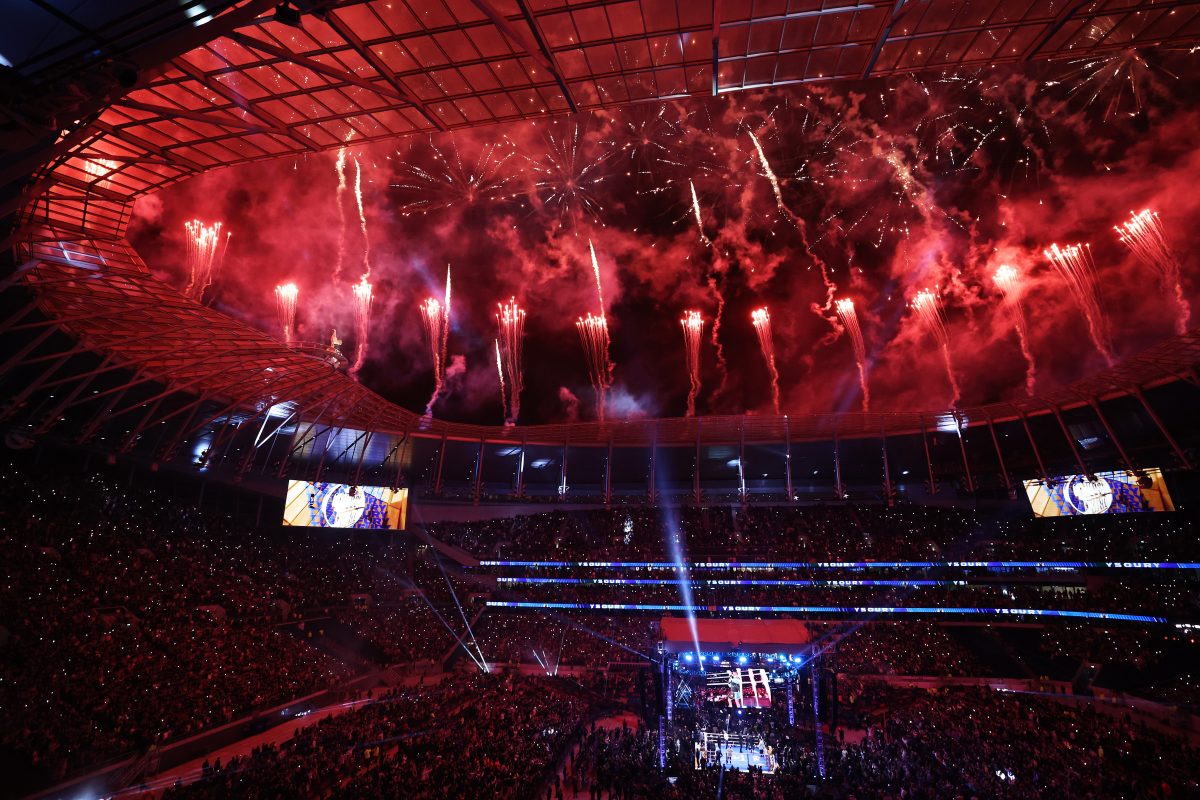
City AM visited the Tottenham Hotspur Stadium during Tyson Fury’s fight with Arslanbek Makhmudov.
Trends change, and keeping up with them can be difficult. Haute Couture fashion houses pump out two collections each year; whether you’re an Xbox or PlayStation user can alter depending on technological advancements in model generations; across sport, meanwhile, the “in” style of tactics shifts as and when teams enter and exit periods of dominance.
The same goes for hospitality. There is a growing trend of enhanced premiumisation across the sector within sport, whether it is clubs stripping out and upgrading their existing offerings or giving greater consideration when new grandstands and stadiums are being built.
The final furlong across the world of horse racing is dominated by hospitality, as are the upper floors of many cricket pavilions. So in a sector that is ever-changing, can anybody keep it fresh?
Last week the Tottenham Hotspur Stadium celebrated its seventh birthday. A behemoth of the venue world, the 62,850-arena is widely seen as one of the best in football, if not sport.
Dominated by a single-tier stand, the north London stadium was built from the ground up with premium offerings in mind. It’s why, after all, the NFL and a plethora of touring artists use the stadium when they are in the capital.
Being in their second floor private suite offering for Tyson Fury’s victory over Arslanbek Makhmudov – and more so the farcical attempts to set up a Battle of Britain fight with the onlooking Anthony Joshua – it is clearly a stark upgrade on similar products across the Premier League.
Tottenham Hotspur Stadium design
“When we designed Tottenham Hotspur Stadium, the idea was to reimagine [hospitality] completely,” Liam Doyle, the Interiors Lead for Tottenham Hotspur Stadium at Jump Studios, the interior design arm of the arena’s architects, Populous, tells City AM.
“We introduced a much broader range of options that enhance the fan experience at every level and give fans the chance to upgrade in smaller, more accessible steps, rather than forcing a big jump in price like the old model did.”
Sure, the stadium is still in its infancy, relatively speaking, but the offering still looks brand new and fresh. It’s been upgraded in its seven years of existence already.
There is a slickness to the design, operation and presentation. Formal seating and informal sofas open up the space, and allow for a view of the stadium bowl beyond the glass.
The 18 outdoor seats are firm but friendly, with heaters to help combat the chilly weather that should quite frankly be banned in April.
Changing the game
“Hospitality and premium experiences are a hugely important part of matchday revenue for clubs,” adds Doyle.
“But from a fan perspective, what’s really changed is that it no longer feels like ‘hospitality’ in the way it did five or 10 years ago. Back then, a hospitality box was literally just a box and it was almost entirely aimed at corporate guests.
“The spaces themselves are on a completely different level – from GA+ [general admission plus] to the top tier. That approach is now being picked up by clubs elsewhere.
“You can see it at places like Craven Cottage, where Populous designed Fulham’s new Riverside Stand, which has a really strong mix of bars and restaurants that wouldn’t feel at all out of place on the high street.
“It’s all about creating more opportunities – more opportunities for fan experiences and more meaningful opportunities for brand engagement, which ultimately leads to increased revenue for clubs.”
Getting hospitality right is difficult: it needs to feel inclusive of the event but not removed from the atmosphere and noise a stadium is designed to provide.
One always wonders if it is possible to replicate the feeling of being in a terrace without standing in one, but Spurs get this pretty spot on. And the Tottenham Hotspur Stadium is setting the trend for others to follow, even into its eighth year.