City AM

Tottenham brewer falls into administration after industry pressures

Submitted by daniel on
Picture
Remote Image
Family-owned Tottenham brewer falls into administration as industry pressures mount - City AM
Description

Family-owned Tottenham brewer falls into administration as industry pressures mount

A beloved family-owned Tottenham brewery that was a key player in London’s craft beer renaissance has fallen into administration amidst mounting cost pressures on the industry.

Redemption Brewing Company, which was the first commercial brewery to open in Tottenham in nearly 100 years, is officially listed on the formal register of new insolvency appointments as having appointed administrators.

City AM understands FRP Advisory has been handed the keys to the brewery and is now searching for a suitable buyer. Redemption is continuing to trade throughout the process.

It comes after a winding up petition – a legal manoeuvre to claw back unpaid sums due – was filed against Redemption in January from the HMRC, with a court showdown scheduled for February 2026.

Redemption’s total deficit increased to -£705,111 in 2024 from -£632,151 in 2023, corporate filings show. It recorded a net loss of £72,960 for the latest financial year.

It also noted concern that the industry faces heavy challenges from utility cost inflation, but loan creditors and directors were able to financially prop up the business. Creditors due after more than one year sat at £426,658.

Tottenham staple feels crunch of cost burdens

Redemption Brewing – which was established in 2010 amidst the major revival in the Capital’s craft beer scene – has become a cornerstone of the Tottenham community, sporting a deep connection to the area’s football team.

Products include its flagship and award-winning premium bitter, aptly named Hopspur as a nod to their roots and a new world IPA named big chief.

The brewer supplies around 75 regular pubs in and around London. Its cask ales are also poured at The Antwerp Arms, N17’s oldest working pub and a cornerstone of Tottenham culture. In 2013, local MP David Lammy – now deputy prime minister – even stepped in to help residents rescue the historic venue after corporate developers threatened to bulldoze it for a block of flats.

A statement from FRP said its appointment “follows a sustained period of financial pressure on the business. Rising duty rates in recent years have placed a particular burden on independent brewers, who face a more challenging cost environment than larger national and international competitors.”

Redemption’s woes come as the independent beer market across the UK has entered what the Society of Independent Brewers and Associates (SIBA) branded a “survival crisis,” driven by the closure of around three brewers a week.

UK brewers face a litany of tax pressures through alcohol duty (charged on alcohol strength), VAT on sales, national insurance on payroll, business rates on their physical warehouse space, and corporation tax on profit.

Hospitality sector feels pinch

Mounting cost pressures have also come from soaring prices of manufacturing and heavy tax hikes on pubs that have left them either closing down or opting for cheaper products from global giants as opposed to local independents.

Late last year, pubs rebelled against business rate changes which sent bills soaring for thousands of landlords.

While Rachel Reeves offered a £300m concession to pubs, hospitality firms have warned they are still under pressure from rising employment costs and energy price hikes caused by the Iran war.

Two thirds of hospitality firms are set to cut jobs as a result of April tax hikes, while one in seven will cease trading altogether.

A number of firms which supply pubs have said these pressures are hitting their own margins.

The brewer of Magners and Bulmers cider said earlier this month that the pressures facing bars and pubs are hitting its own sale volumes.

Roger White, C&C Group’s chief executive, said that cost inflation, a weakening employment market and falling demand meant that their sales to hospitality firms took a dip.

In April, English sparkling wine producer Chapel Down told City AM that the “tax burden” imposed at the Chancellor’s last budget has hit the bars and restaurants that it supplies.

Source

Tottenham Hotspur hospitality: Trendsetting innovation in action

Submitted by daniel on
Picture
Remote Image
Tottenham Hotspur hospitality: Trendsetting innovation in action - City AM
Description

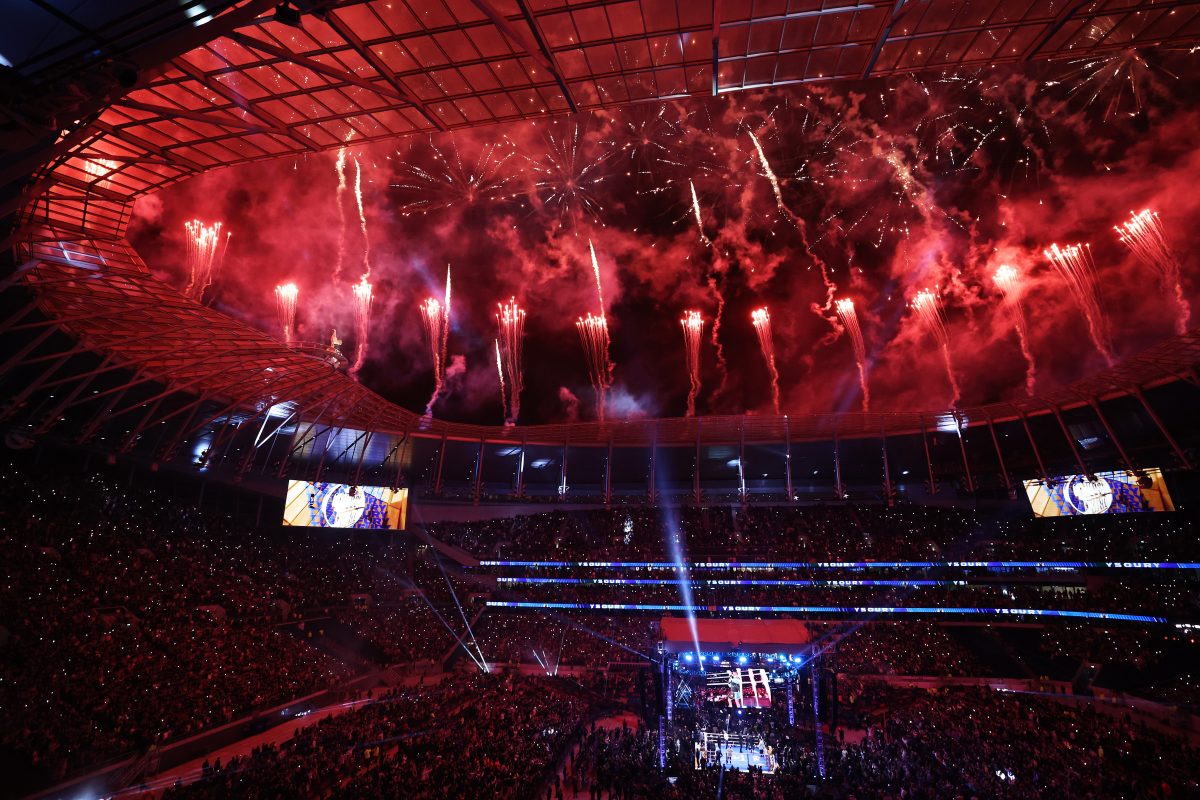
City AM visited the Tottenham Hotspur Stadium during Tyson Fury’s fight with Arslanbek Makhmudov.

Trends change, and keeping up with them can be difficult. Haute Couture fashion houses pump out two collections each year; whether you’re an Xbox or PlayStation user can alter depending on technological advancements in model generations; across sport, meanwhile, the “in” style of tactics shifts as and when teams enter and exit periods of dominance.

The same goes for hospitality. There is a growing trend of enhanced premiumisation across the sector within sport, whether it is clubs stripping out and upgrading their existing offerings or giving greater consideration when new grandstands and stadiums are being built.

The final furlong across the world of horse racing is dominated by hospitality, as are the upper floors of many cricket pavilions. So in a sector that is ever-changing, can anybody keep it fresh?

Last week the Tottenham Hotspur Stadium celebrated its seventh birthday. A behemoth of the venue world, the 62,850-arena is widely seen as one of the best in football, if not sport.

Dominated by a single-tier stand, the north London stadium was built from the ground up with premium offerings in mind. It’s why, after all, the NFL and a plethora of touring artists use the stadium when they are in the capital.

Being in their second floor private suite offering for Tyson Fury’s victory over Arslanbek Makhmudov – and more so the farcical attempts to set up a Battle of Britain fight with the onlooking Anthony Joshua – it is clearly a stark upgrade on similar products across the Premier League.

Tottenham Hotspur Stadium design

“When we designed Tottenham Hotspur Stadium, the idea was to reimagine [hospitality] completely,” Liam Doyle, the Interiors Lead for Tottenham Hotspur Stadium at Jump Studios, the interior design arm of the arena’s architects, Populous, tells City AM.

“We introduced a much broader range of options that enhance the fan experience at every level and give fans the chance to upgrade in smaller, more accessible steps, rather than forcing a big jump in price like the old model did.”

Sure, the stadium is still in its infancy, relatively speaking, but the offering still looks brand new and fresh. It’s been upgraded in its seven years of existence already.

There is a slickness to the design, operation and presentation. Formal seating and informal sofas open up the space, and allow for a view of the stadium bowl beyond the glass.

The 18 outdoor seats are firm but friendly, with heaters to help combat the chilly weather that should quite frankly be banned in April.

Changing the game

“Hospitality and premium experiences are a hugely important part of matchday revenue for clubs,” adds Doyle.

“But from a fan perspective, what’s really changed is that it no longer feels like ‘hospitality’ in the way it did five or 10 years ago. Back then, a hospitality box was literally just a box and it was almost entirely aimed at corporate guests.

“The spaces themselves are on a completely different level – from GA+ [general admission plus] to the top tier. That approach is now being picked up by clubs elsewhere.

“You can see it at places like Craven Cottage, where Populous designed Fulham’s new Riverside Stand, which has a really strong mix of bars and restaurants that wouldn’t feel at all out of place on the high street.

“It’s all about creating more opportunities – more opportunities for fan experiences and more meaningful opportunities for brand engagement, which ultimately leads to increased revenue for clubs.”

Getting hospitality right is difficult: it needs to feel inclusive of the event but not removed from the atmosphere and noise a stadium is designed to provide.

One always wonders if it is possible to replicate the feeling of being in a terrace without standing in one, but Spurs get this pretty spot on. And the Tottenham Hotspur Stadium is setting the trend for others to follow, even into its eighth year.

Source

Tottenham Hotspur make £121m pre-tax loss despite Europa League win

Submitted by daniel on
Picture
Remote Image
Tottenham Hotspur make £121m pre-tax loss despite Europa League win - City AM
Description

Tottenham Hotspur have announced a pre-tax loss of £121m for last season despite revenue increasing by seven per cent as they won the Europa League.

Spurs, who are set to name Roberto de Zerbi as their new manager in a bid to stave off the threat of relegation, suffered a drop in media revenues as they finished 17th in the Premier League and saw operating expenses increase due to a higher wage bill and hosting more games.

Those factors more than offset increases in matchday takings, commercial income and prize money from their Europa League success as Tottenham made a pre-tax loss of £120.6m and net loss of £94.7m on revenues of £565.3m.

Net debt increased to £831.2m as of 30 June 2025, up nearly £60m on the previous year, although more than 90 per cent of financial borrowings are at fixed rates averaging just above three per cent.

Spurs directors prepare for ‘downside scenario’

The results come during a turbulent season for the north London club, who sacked manager Ange Postecoglou last summer and dispensed with his successor Thomas Frank in February. His interim replacement Igor Tudor left Spurs this week, having failed to arrest their slide.

“The Board of Directors continually monitors the Group’s exposure to a range of risks and uncertainties, including the success of the First Team and our level of spending thereon, the current economic landscape and the funding requirements for capital projects,” the report says.

“The Directors have identified a number of actions they could take in order to mitigate any potential cash flow or financing shortfalls, which could potentially arise in a downside scenario.

“These mitigating actions could include, but are not limited to, advancement of future cash inflows and/or deferring future cash outflows, sale of assets and additional financing arrangements.”

Source

Spurs relegation: A black swan event the Premier League needs?

Submitted by daniel on
Picture
Remote Image
Tottenham Hotspur relegation: A black swan event the Premier League needs? - City AM
Description

Tottenham Hotspur relegation: A black swan event the Premier League needs?

The Premier League trades on its unpredictability so the relegation of Spurs, one of its ever-present clubs, could offer a Leicester-like lift in a dull season, says Ed Warner.

Barnsley, Oldham Athletic, Bradford City, Swindon Town, Portsmouth. Just a few members of the not-so-exclusive club of 16 teams that Tottenham Hotspur fans will be desperate for their side to be barred from.

Each has been relegated from the Premier League exactly once in a competition that is now in its 34th season. Only two, Aston Villa and Bournemouth, have managed to regain top-flight status.

Thirty-three completed Premier League seasons equates to 99 relegations, shared between 43 different clubs – almost half of the total in the top four divisions. Just six teams have been ever-present since the league’s launch in 1992-93. Spurs are one; Arsenal, Chelsea, Everton, Liverpool and Manchester United make up the set.

Now, Tottenham enter the international break in a deep funk, just a point above the relegation zone. The club have spent the past few months as if they had the Marx Brothers at the helm. Harpo and Groucho in the boardroom and Zeppo paired with Chico on the touchline perhaps?

At the time of writing, the bookies’ odds equate to a 37 per cent chance of a Spurs relegation, compared to 43 per cent for West Ham – the side currently occupying 18th place in the table.

What price Premier League bosses, especially those charged with raising broadcast and sponsorship dollars, secretly hoping that their exclusive club of six ever-presents is reduced by one over the remaining eight rounds of matches – especially with the quality of football in the league going through a trough at present?

It is often said that the so-called Big Six clubs (the ever-presents plus Manchester City and minus Everton) quietly resent Leicester City’s Premier League title win. That underdog triumph is now 10 years in the past, but is still cited as evidence that any team’s ability to win the league is not simply theoretical.

This apparent competitiveness forms a key part of the league’s marketing narrative. That doesn’t mean it’s welcomed by the wealthiest clubs, however. For them, competitive appeal need go no further than competing for titles and Champions League qualifying places among themselves.

It may be that the single black swan event of Leicester’s 2015-16 season is all that the Premier League needs to sustain its marketing pitch. However, six titles for Manchester City, two for Liverpool and one for Chelsea in the nine completed seasons since does not speak to competitive breadth.

Indeed, in the last 22 seasons the Big Six have filled all of the top three places in the league – apart from Leicester’s interloper act.

Spurs have taken a top-three spot three times in the past 10 seasons, albeit those finishes will be fast fading in fans’ memories, the last being a third place way back in 2017-18.

How piquant then that the cockerels could prove to be the black swans that provide an injection of global interest to boost the Premier League’s brand.

Tottenham Hotspur’s wealthy counterparts might snicker. More likely they will shiver; “there but the grace of God” thoughts running through their heads in the still of the night.

Parachute payments distort competition in the Championship in favour of the relegated, but would hardly compensate for the loss of revenue for any club whose ambitions are built on continuous European competition and dreams of silverware (however often these are dashed).

Spurs certainly aren’t structured like the traditional yo-yo clubs, those who have experienced the most Premier League drops. Ponder for a moment the financial complexities of re-engineering a squad whose player contracts may not all have built-in relegation clauses – although Spurs’ commercial deals may not either.

Any club’s “bigness” might be a general perception, or perhaps (depending on the club) self-deception, on the part of those happy to bask in the assumed status. It does though tend to have a tangible foundation in the form of stadium capacity and hence revenue-generating potential.

Of course, you can’t just build a state-of-the-art facility and assume loyal fans/customers (take your pick as to how you view them, according to your leadership culture) will fill it repeatedly. Stadia are expanded to reflect actual demand and belief in its future growth.

The Tottenham Hotspur Stadium, seven years old now, is the second biggest in the Premier League and unarguably remains the finest overall. (Relegation rivals West Ham have the third largest, albeit with lesser operating costs but also far lower revenue-generating potential, given the limited facilities and the club’s tenant status).

If there was a simple, direct correlation between stadium size and sporting success then football wouldn’t be worth following. As it is, the grandeur of Tottenham’s stadium only adds to the apparent delight of broadcast editors who have cut repeatedly to shots of anguished Spurs supporters during recent matches, as well as drone footage of those departing early to trudge for the tube or seek a traffic-free drive home.

These fans will each have their own analysis of where it has all gone wrong over the past couple of years (remember, there was some writing on the wall with a 17th place finish last season and a managerial sacking in spite of Spurs’ Europa League triumph).

Does the blame lie with long-standing executive chairman Daniel Levy or those who ousted him in the autumn? With an executive team headed by a new chief executive previously at arch rivals Arsenal?

How should it be shared between the past three managers and their coaching staff? What blame should be laid at the door of the playing squad, and/or those who recruited them? Could the new stadium itself be a curse, an even greater burden of cost and expectation than the Emirates has proved for Arsenal?

And what of those fans who choose to boo or leave early, as if they’d bought a ticket for a pantomime rather than a sporting contest in which the extent of their loyalty forms a part of the narrative?

For the rest of us, the apportionment of blame simply doesn’t matter – unless we are seeking lessons for our own teams. What matters, in a very positive way, is that such close flirtation with relegation can happen at any club, even one which arrogantly chose to be part of the attempted European Super League.

The annual Premier League thriller must always have an uncertain ending. In the current season of dispiritingly clunky football, the value of that uncertainty and Spurs’s part in it is greater than ever.

Old dogs, new tricks?

Ben Stokes called for “some dog” from his team during their woeful Ashes tour over the winter. Now the England Test captain has welcomed the ECB’s [bold/foolhardy – delete to taste] decision to leave its top dogs in place through to Australia’s defence of the urn over here next summer.

The announcement this week from CEO Richard Gould majored on his “not football” observations about loyalty to leadership which Stokes reinforced on social media. Perhaps Gould had in mind Tottenham’s six permanent and three caretaker managers over the past five years.

“My old man was a football manager. Sacking was part of the job and it wasn’t necessarily the right thing.”

Richard Gould

I guess we’ll know whether Rob Key and Brendon McCullum really warrant the ECB board’s backing within the next three months, the Test series against New Zealand being finished by the end of June.

The ICC’s World Test Championship produces an idiosyncratic ranking. For what it’s worth, New Zealand are currently second in the world, England seventh. Time for those dogs to bark.

Ed Warner is chair of GB Wheelchair Rugby and writes his sport column at sportinc.substack.com
Source

Tottenham Hotspur Women MD: ‘We want to be challenging for the WSL’

Submitted by daniel on
Picture
Remote Image
Tottenham Hotspur Women MD: ‘We want to be challenging for the WSL’ - City AM
Description

You could be forgiven for thinking that it’s all doom and gloom at Tottenham Hotspur, but there is a good news story unfolding in N17.

While the men’s team toil to stay in the Premier League as their mortal enemies from down the road close in on the title, Spurs Women are on a gloriously different trajectory.

Just goal difference outside the top four in the Women’s Super League and in the quarter-finals of the Women’s FA Cup, this could yet be a historic season for a team buoyed by in-form pair Olivia Holdt and Cathinka Tandberg.

Women’s managing director Andy Rogers credits the summer arrival of head coach Martin Ho, allied to a rapid professionalisation behind the scenes and the support of club CEO Vinai Venkatesham, with pushing Spurs Women to new heights.

“Martin’s made a massive impact, but there’s been huge amounts of work that have landed us in this place,” he tells City AM.

“Now the challenge is, how do we sustain it and how do we elevate it? There isn’t an egg timer in that we have to be in the Champions League at this point. However, our ambition is to be that.

“We want to be challenging within that top three and consistently. We want to be in there. We want to be winning trophies. We want to be challenging for the WSL.”

Part of the masterplan for elevating Spurs is major investment in a new training ground and academy to be built at Whitewebbs Park in Enfield.

Rogers wants it to become women’s football’s answer to La Masia, Barcelona’s legendary youth set-up, and says Ho is integral to the project.

“Our vision for the women’s team is to develop players but equally when we do buy, they have to be in an environment that is better than anywhere else,” he adds, citing the capture of starlets Toko Koga and Signe Gaupset.

“We believe Martin is exactly the person we need. I won’t swap him for anyone – you can throw any name at me – and I’ll live and die by that because he’s so instrumental to the project.”

Spurs Women’s evolution is also evident in their growing presence at the Tottenham Hotspur Stadium, including this Sunday’s Mother’s Day match with Everton.

“It’s not just about mum and daughter – you can bring the full family,” he says. “We’re also aware the players are so close to their mums. It’s a good moment to bring their families to a game as well.”

The ambition is to move the majority of home games from Brisbane Road, which they borrow from Leyton Orient, to the club’s 63,000-seater ground “within the next couple of seasons”.

“We can’t just rely on the Arsenal games, the Chelsea games,” he says. “We have to get to a place where the habits of supporters are to come regardless of the opposition.”

Spurs Women insulated from men’s team woes

Rogers repeats the mantra that Tottenham operate with a “one club, two teams” mentality, emphasising that the women’s set-up is run independently and autonomously.

That will not mean going as far as some of their WSL rivals, such as Everton, Chelsea and Aston Villa, and carving the women’s team out into a separate legal entity, however.

“I can understand it, but I would also know being amongst it, you can see the challenges of it quite clearly in terms of what that separation actually looks like. It’s not anything we’re looking at doing now or have any desire to do,” he says.

“Removing the grey and being really clear with what we’re trying to achieve and how we’re going to do it has been a massive help. And I think, broadly, the biggest challenge going any other route is the gray that exists within it.”

Rogers is already deep into planning Spurs’ summer transfer business as the club look to challenge the grip of Manchester City, Chelsea, Arsenal and Manchester United on the top four.

He is confident that his budget will not be affected if the unthinkable should happen to the men’s team and they lost their top-flight status for the first time in almost half a century.

“What I’ve had loud and clear in conversations with Vinai is that while we’ve got this mantra of being one club and two teams, the two teams piece is really evident in that we can’t run the women’s team based off what the men do,” he says.

“We can’t be derailing things, because we’re making such significant progress.”

Source

Tottenham Hotspur co-owner Daniel Levy gets gong in New Year Honours list

Submitted by daniel on
Picture
Remote Image
Tottenham Hotspur co-owner Daniel Levy gets gong in New Year Honours list - City AM
Description

Tottenham Hotspur co-owner Daniel Levy has received a gong from the King in the 2026 New Year Honours list.

Levy, whose near 25-year tenure as chairman of the north London club came to an end in September, has been given a CBE by Charles III.

The club said Levy, who still has a stake in the Premier League club, stepped down as part of “succession planning”. He remains a co-owner of the club through shares held in Tottenham’s parent company ENIC Group.

Levy’s CBE has been awarded for “services to charity and the community in Tottenham”.

Former Premier League chairman Gary Hoffman was also awarded a CBE, alongside Lionesses captain Leah Williamson.

Hoffman is also the chair of Monzo, with reports this month suggesting shareholders were plotting a coup against the man who left the Premier League after Saudi Arabia’s purchase of Newcastle United through its Public Investment Fund vehicle.

Former Marylebone Cricket Club chief executive Derek Brewer, once chief of Scottish football club Hearts, Ann Budge, and former ECB chair Barry O’Brien were given OBEs alongside Silverstone chief executive Stuart Pringle.

Levy given gong

“This year’s Honours list celebrates the very best of Britain – people who put the common good ahead of themselves to strengthen communities and change lives,” Prime Minister Sir Keir Starmer said.

Elsewhere ice skating stars Jayne Torvill and Christopher Dean have been honoured with dame and knighthoods, while Williamson’s teammates Alex Greenwood, Georgia Stanway, Keira Walsh and Ella Toone picked up MBEs.

Red Roses Marlie Packer and Zoe Stratford got OBEs after England’s victory at the Rugby World Cup this autumn; Meg Jones, Sadia Kabeya and Ellie Kildunne got MBEs; and Rugby World Cup tournament figures Gillian Whitehead (OBE) and Sarah Massey (MBE) were honoured. England head coach John Mitchell got an OBE.

Broadcaster Gabby Logan, commentator Clive Tyldesley and Paula Radcliffe got OBEs, while Olympians Rhys McClenaghan and Toby Roberts have been made MBEs.

Culture Secretary Lisa Nandy said: “It has been an historic year for women’s sport and I could not be more pleased to congratulate our Red Roses and Lionesses on their New Year’s Honours.

“To have two England teams – in two of our most loved sports – win major tournaments in the space of a few months was just extraordinary. You’ve united the country, inspired girls and boys everywhere to get into sport and well and truly changed the game.”

Source

Tottenham Hotspur set for new front-of-shirt sponsor despite AIA deal

Submitted by daniel on
Picture
Remote Image
Tottenham Hotspur set for new front-of-shirt sponsor despite AIA deal - City AM
Description

Tottenham Hotspur is ending its front-of-shirt sponsorship deal with insurance giant AIA Group Limited at the end of next season.

The Hong Kong–based multinational firm has featured on the front of the north London club’s home shirts for a decade and will continue to do so until the conclusion of the 2026-2027 season.

But then the Hang Seng Index stalwart will transition to a “global training partner” and “its brand will be featured on the training wear for all teams and coaches’ apparel”.

Tottenham Hotspur’s chief revenue officer, Ryan Norys, said “both brands have experienced significant growth”, adding that the deal is a “partnership that will see our two globally recognised brands remain synonymous with each other for many years to come”.

The finding of a new front-of-shirt partner comes as the club looks to follow the wider stadium strategy used in New Jersey’s MetLife Stadium, where each of the Tottenham Hotspur Stadium’s stands will be activated by a separate brand. SI Tickets took up the first of these earlier this season.

New deal for Spurs?

“We’re identifying how we authentically integrate brands into these spaces without taking away from the design, the architecture… You don’t want it to become a billboard,” Norys said on the matter.

The club is also seeking a full naming rights sponsorship deal for their 62,850-capacity north London stadium.

The AIA training kit deal will extend their partnership with Tottenham Hotspur through until 2032.

“Asia is the region with the Premier League’s largest fanbase and as we enter the next chapter of our collaboration,” Stuart Spencer of AIA said.

Tottenham are sixth in the Premier League table, having won five of their 10 matches, and take on Copenhagen in the Champions League this evening.

The team won the Europa League last season before long-standing chief executive Daniel Levy left the club this season.

Source

Win a hospitality and ticket package for two to Tottenham v Liverpool

Submitted by daniel on
Picture
Remote Image
Win a hospitality and ticket package for two to Tottenham v Liverpool - City AM
Description

Includes access to private suite, drinks and pre-match meal

City Winners have partnered with leading hospitality company, Go Privilege to offer a City Winner a VIP hospitality package and tickets for two at the Tottenham Hotspur Stadium to see Tottenham vs Liverpool on 20th December.

This fixture is one of the biggest and most intense fixtures in the Premier League calendar. Two attacking sides with world-class squads and fanbases are sure to provide a thrilling contest full of drama, unforgettable moments and hopefully goals. From last-minute winners to top-four deciders, this fixture rarely disappoints and you can enjoy it all from the edge of your seat in the comfort of a premium hospitality setting in one of the most modern, impressive football stadiums in the world.

Go Privilege’s dedicated Hospitality Team will ensure the winner and their guest will have an outstanding VIP experience. You will enjoy exclusive access to a private 21-person suite, a welcome drink on arrival, luxury padded seats located directly in front of the suite and a three-course pre-match dining experience, prepared by your private suite chef. VIP parking is available on request.

About Go Privilege

Go Privilege was born from a deep-seated passion for sports, grand events, and global travel. Driven by the ambition to create extraordinary memories for those who seek the finest in life, Go Privilege specialises in curating exclusive, bespoke journeys that place you at the heart of iconic events and breathtaking destinations. Renowned for award-winning service and unrivalled attention to detail, Go Privilege is dedicated to delivering luxury travel and event experiences with seamless guidance and care. Whether securing exclusive access to the world’s most sought-after events or curating every detail of your dream travel itinerary, their dedicated team ensures that each experience is meticulously designed to reflect your unique aspirations. For more information visit goprivilege.co.uk or call +44 (0) 208 064 1111

Source

Tottenham Hotspur take £90m loan following big-spending summer

Submitted by daniel on
Picture
Remote Image
Tottenham Hotspur take £90m loan following big-spending summer - City AM
Description

Tottenham Hotspur have taken out a £90m loan from Australian bank Macquarie in a move that improves the heavily indebted Premier League club’s cash flow.

Spurs have borrowed the sum against future media rights revenue that they are due to receive from the Premier League during the current season.

Such loans are not uncommon even in the top flight of English football and typically reflect a short-term squeeze on liquidity resulting from outgoings. Bloomberg first reported the loan.

Tottenham spent heavily in the summer transfer window, committing around £180m on new signings including Xavi Simons and Mohammed Kudus, before wages and agent fees are taken into account.

Spurs also have long-term debts which stood at more than £750m at the last count, much of it in long-term financing related to construction of their stadium.

The Lewis family, which majority owns the north London club through company Enic, ousted executive chairman Daniel Levy in a surprise move last week, although there is no suggestion that decision was related to the Macquarie loan.

It led to fresh speculation that Enic could sell Tottenham, who are valued at around £3.5bn, although the Lewis family shot down sale talk earlier this week.

Spurs owners ‘know club needs investment’

They also revealed they had “received, and unequivocally rejected” proposals from financier Amanda Staveley’s PCP International Finance Limited and US-Chinese consortium Firehawk Holdings Limited.

“The Board of the Club and Enic confirm that Tottenham Hotspur is not for sale and Enic has no intention to accept any such offer to acquire its interest in the Club,” they said.

Spurs chief executive Vinai Venkatesham added on Monday that it had been made “unambiguously clear that Tottenham Hotspur is not for sale”.

“I think it is very fair to say that we have firm backing from the Lewis family against our ambitions to be successful on the pitch, both on the men’s side and women’s side,” he said. “They know that’s going to require investment, and we have their firm backing.”

Source

What next for Tottenham Hotspur after Daniel Levy's departure?

Submitted by daniel on
Picture
Remote Image
What next for Tottenham Hotspur after Daniel Levy's departure? - City AM
Description

What next for Tottenham Hotspur after Daniel Levy departs?

When it finally came, Daniel Levy’s departure as chair of Tottenham Hotspur took everyone by surprise – even those within the club.

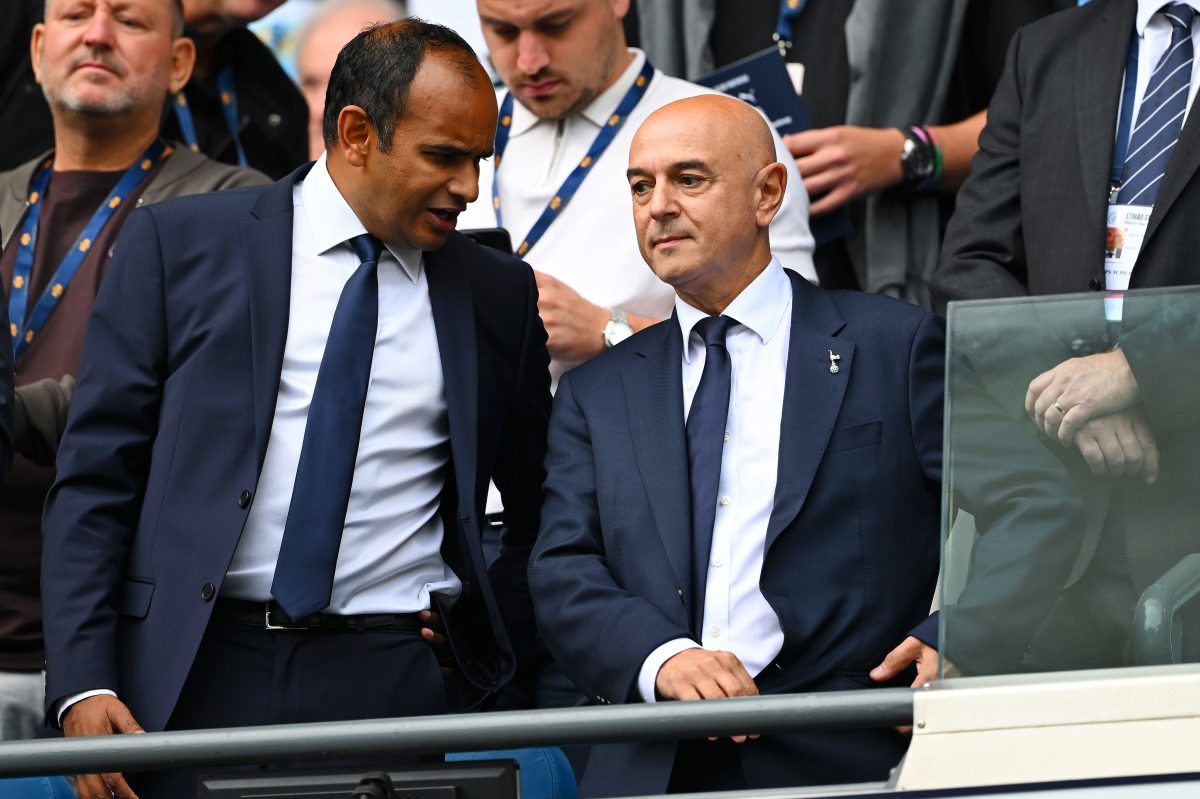
On Thursday, just before 6pm, Spurs announced that the man tasked with running the club for the Lewis family for almost a quarter of a century was stepping down.

Before the evening was out widespread reports emerged that the Lewis family had forced the move, which followed a summer of boardroom upheaval in N17.

First, former Arsenal CEO Vinai Venkatesham was hired in the same role, then Levy’s right-hand woman, Donna-Maria Cullen, left after three decades at the club.

Soon after, chief football officer Scott Munn was shown the door, while Levy’s exit has seen former Citibank boss and long-time Lewis ally Peter Charrington appointed non-executive chairman.

It has led to a growing feeling across the game that Tottenham are being prepared for investment and perhaps even a full takeover.

Why Spurs are attractive to buyers

On paper, the club is already an attractive asset – in large part due to the money-making potential of their stadium, which also hosts NFL games and high-profile concerts.

That has helped to make Spurs the ninth richest club in the world, according to Deloitte’s most recent Football Money League, which ranks teams by revenue.

On top of that, naming rights to the Tottenham Hotspur Stadium remain unexploited, not least because Levy was unable to achieve the sponsorship value he had hoped for.

They are also basking in the glow of a first major trophy for 17 years, having won the Europa League last season, and have a highly-rated manager in Thomas Frank.

The club are valued in the region of £3bn to £3.5bn, although given the scarcity of Premier League teams and rising valuations across sport, could command more.

Why Levy exit makes sale easier

Levy’s departure makes a sale of some kind easier – and perhaps necessary, given that he effectively owns a significant chunk of Spurs.

He has just shy of 30 per cent of equity in Enic, the Lewis company which controls Tottenham through its 86 per cent shareholding.

Given that he has effectively been pushed out of the club he has shaped for 24 years, it is hard to see Levy hanging onto involvement – lifelong Spurs fan or not.

His absence may also increase the appeal of an investment in Tottenham; his famously iron will combined with his equity would have made him a potentially tricky partner.

Now Spurs have a more conventional corporate structure, with CEO Venkatesham running day-to-day matters and reporting to non-exec chair Charrington.

Who could buy Tottenham?

Several suitors have shown interest in buying into Tottenham in recent years, from existing football owners to big players in the sport investment space.

Qatar Sports Investments, owners of European champions Paris Saint-Germain, held talks with Levy about buying a minority stake in Spurs more than two years ago.

QSI baulked at the price tag, however, and dropped its interest. It is not expected to revive it, preferring to pursue a deal to buy Malaga in Spain’s second division.

Former Newcastle United minority owner Amanda Staveley has also been linked with assembling an offer for Tottenham since leaving St James’ Park last year.

The US, however, is seen as the most likely source of proposals, given the sheer volume of private capital that has flowed across the Atlantic in the last few years.

Jahm Najafi of MSP Sports Capital was reported to have offered a deal of £3.1bn earlier this year, in conjunction with investors from the Middle East.

Source