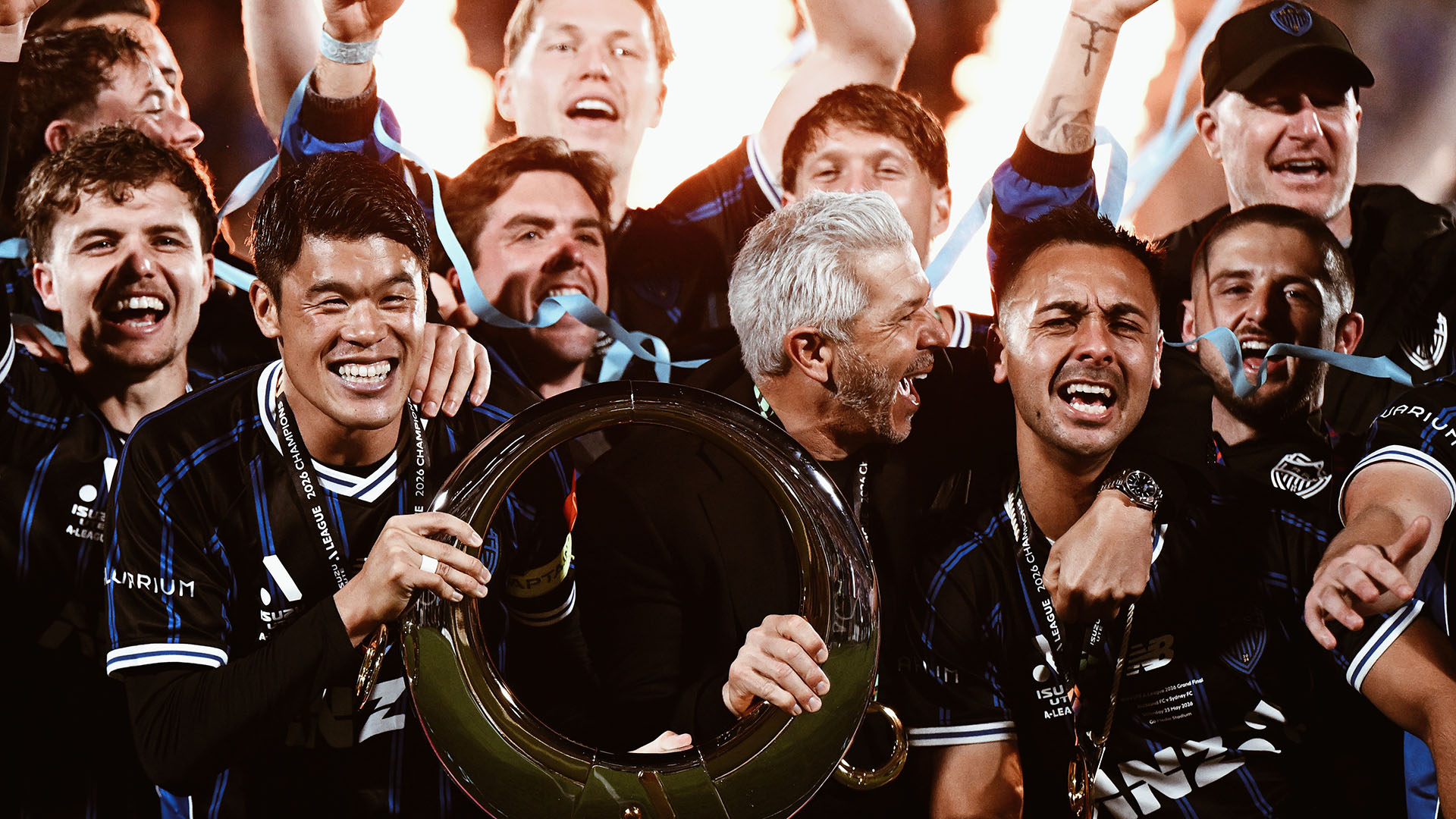
Auckland FC are reigning A-League champions after beating Sydney FC – who we play next week – in the Grand Final in May – New Zealand’s first A-League crown.
A number of the Black Knights’ players were part of New Zeland’s World Cup squad but as the new A-League season approaches, they’ve lost head coach Steve Corica to J.League side Yokohama F. Marinos.
We’re expecting a record crowd for a men’s soccer match in New Zealand – the record is 43,217 for the Women’s World Cup in 2023 – but what we can we expect from our hosts?
We spoke to Michael Burgess, Senior Sports Journalist at the New Zealand Herald…
What can we expect from Auckland FC at Eden Park?
Michael: “Yeah, this is a big, big deal. I mean, this will be one of the biggest matches of some of these players' lives, especially the young players, to take on a Premier League team. It's the sort of thing they dream about. Auckland FC is a team coming off an historic season. They won the A-League, and became the first New Zealand team to do so. Wellington have been in the A-League since 2007 and never could quite do it. In May, Auckland won the Grand Final here in Auckland. It was an incredible thing. I think that means there's a real foundation of confidence and belief in the squad - but the caveat would be that things have changed a lot. So, three or four of the most important players have left, two or three were with the All Whites on World Cup duty and won't be playing, so there's a bit of mystery about the line-up. Also, we don't have a head coach. Steve Corica, on the back of his success, got snapped up by Yokohama Mariners in Japan – in fact, Auckland FC have lost their head coach, the assistant, and their goalkeeping coach. In terms of Sunday, they've still got the base of last year's team, but there will be more young players than normal.”
Tactically, how do Auckland normally approach it?
Michael: “The style they liked to play with the previous manager, and I'm sure they'll continue, is basically a 4-3-3. They like to use a big guy, Sam Cosgrove, who did really well for Aberdeen, been in the English league for a long time, a big, tough, rangy striker. He's the focal point. They like to get wingers around him and a couple of full-backs who get forward as well. They’re good at set pieces, good delivery. I don't know how much pressing they'll do against Spurs. It might be a bit different, but I think it'll be a matter of trying to see if they can get a foothold in the game. The main thing you always hear from New Zealand players when they go to a Club World Cup or something, or the All Whites, it's all about trying to get used to that, trying to adjust, because you get on the field and suddenly the ball's zooming around. That'll be the challenge. The way we look at, no matter who Spurs put on the field, it will be a really good level.”
You mentioned potentially a record attendance for a men’s match in a preview in the NZ Herald - it shouldn't be underestimated what us playing here means to New Zealand football fans…
Michael: “It's massive. I still remember Everton coming here in 1987. They'd just won the league. The deal had been signed a year before. That made such an impression on me as a school kid. I never forgot it, seeing those players. Since then, it's been pretty rare to have teams that big. I remember the LA Galaxy coming, David Beckham, and that created quite a bit of interest in 2007. Then, in 2014, we had Newcastle come with West Ham, which was massive. We had a lot of English teams come here in the 1970s and 1980s (we visited in 1976) but generally it’s seen as a bridge too far because it is a long way. It's the longest journey you can make, right? It’s created such a buzz because the Premier League is bigger than ever now in New Zealand. That’s going to be reflected in tomorrow's crowd, from what I’ve been told, the biggest crowd for a men's game, and the biggest crowd outside the Women's World Cup - bigger than any All Whites match, bigger than the LA Galaxy one, bigger than the West Ham-Newcastle. Manchester United came here in 1968 with George Best and Bobby Charlton, and they got 26,000. Okay, different times, but, yes, it's huge.”
Finally, we play at Eden Park, the home of the All Blacks - can you put into words what the All Blacks mean to the people of New Zealand?
Michael: “I'd say two things. I'd say that, yes, it still stops the nation whenever they play. It feels like we still base most of our self-esteem on how the All Blacks are doing. You know, our pride as a nation depends on the All Blacks. Eden Park, it's sort of the cathedral in New Zealand sport, because the All Blacks have had this crazy, unbeaten run there since 1994. I think it's 53 matches now. It is a special place. It's got a lot of history. What I would say is that New Zealand's changed in my lifetime. Rugby's still so big, but it's not everything. Football is now the biggest participation sport by quite a long way. A lot of people are playing football. A lot of people are watching it. It doesn't have that commercial base that rugby does, but it's definitely growing. You'd see as many kids around Auckland wearing Premier League shirts, or Auckland FC shirts, as you would wearing All Blacks shirts. I think the new generation has changed, but in terms of the media and the corporate market, everything still revolves around the All Blacks.”