The Ringer

Tottenham’s Relegation Would Be Shocking. It Now Seems Inevitable.

Submitted by daniel on
Picture
Remote Image
Tottenham’s Relegation Would Be Shocking. It Now Seems Inevitable. - The Ringer
Description

For as long as the term “Spursy” has existed as shorthand for Tottenham Hotspur’s particular brand of underachievement, the club has always been safe from massive embarrassment and the threat of relegation. Saying something was Spursy meant frustration, not catastrophe. It was a jestful insult from rival fan bases to mock Tottenham’s late collapses, missed opportunities, and disappointing seasons.

Spursy has never suggested anything close to the perilous situation Spurs find themselves in right now. With less than a month remaining in the season, Tottenham is staring down the increasingly likely and terrifying prospect of relegation from the Premier League. It’s been a swift fall—remember that less than a year ago, they beat Manchester United in the Europa League final to claim their first trophy since 2007. Betting markets now think Spurs are more likely than not to be relegated, something that has not happened to the club in its 34-year history in the Premier League. The club has kept its place in the highest division of English soccer every year since 1978.

Relegation wouldn’t just be a financial setback, but a full-on identity crisis. It would expose that while Spurs spent more than a decade trying to act like a superclub, it never had the transfer or recruiting strategy to actually be one. For decades, Tottenham have occupied a very specific place in England’s hierarchy—never quite champions, but always good enough to be in the mix. The club is big enough to attract star players, and it’s become wealthy enough to build one of the most expensive stadiums in the world.

Relegation would almost immediately erase that prestige. The special Champions League nights disappear. The trips to Anfield and Stamford Bridge would be replaced by midweek EFL Championship games in smaller grounds. They might even find themselves featured in the next season of Welcome to Wrexham. Their best players probably won’t stick around, either—they’re not trying to spend a year of their primes in a second-tier league.

The Tottenham we’ve come to know might not survive the drop. And just ask Leeds and Sunderland fans—who saw their clubs struggle to rejoin the top flight for many years—about how hard it can be to return to the Premier League. For every team that has an immediate rebound, there’s also a Leicester, who won the title 10 years ago and now will be in the third division next season after multiple relegations.

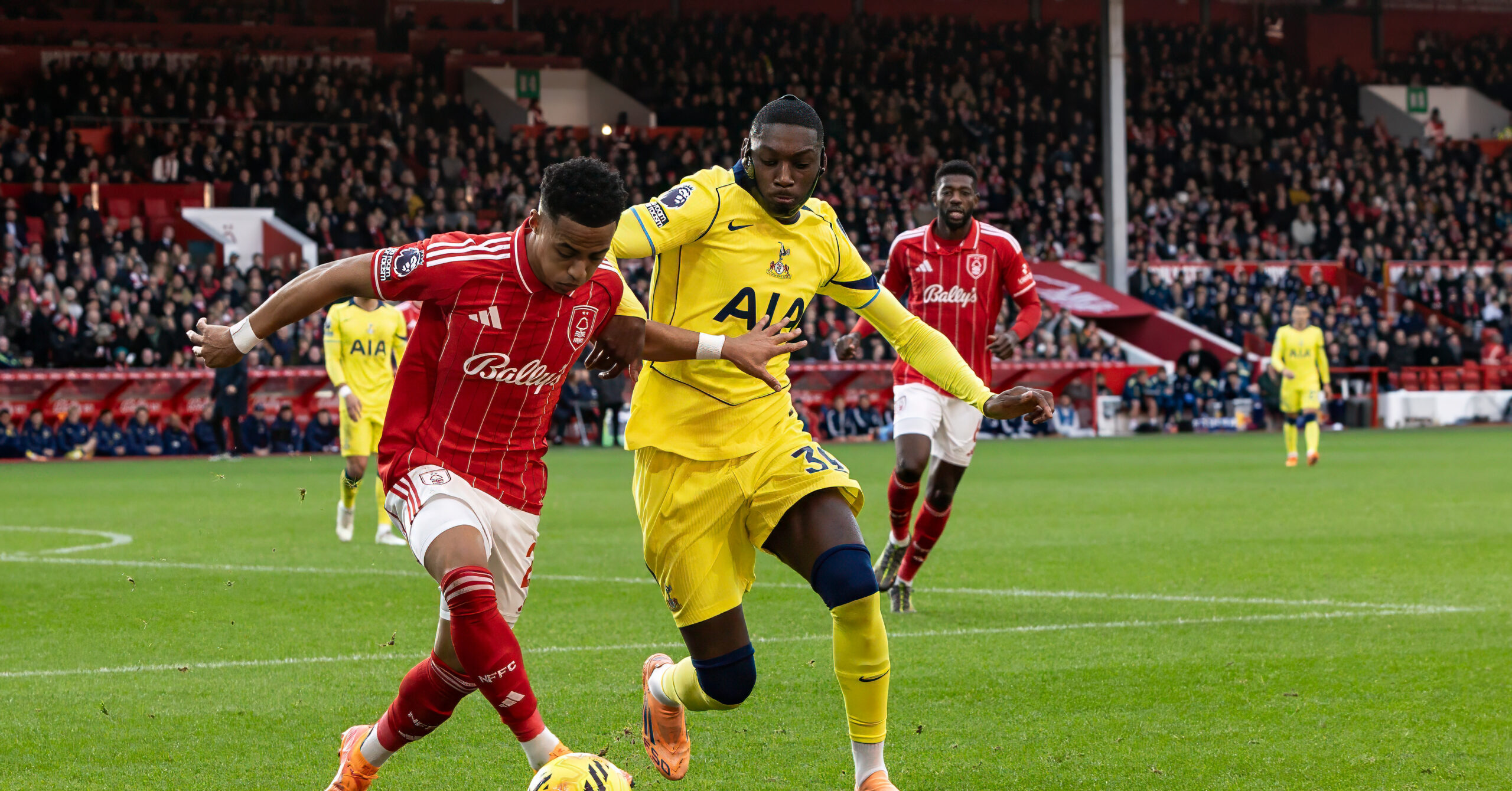
The likelihood of getting booted from the league rises with each passing week. Tottenham finally won its first Premier League match of 2026 on Saturday against the last-place Wolves, but the triumph was pyrrhic. Two of Spurs’ most important attacking players—Xavi Simons and Dominic Solanke—left the game with injuries. And the two teams Spurs are sluggishly chasing—West Ham and Nottingham Forest—each won their matches past this weekend. Now, Tottenham sit in 18th place, two points behind West Ham and four behind Forest with just four matches to play. Spurs might have been back in the win column again, but their chance at survival is just as much in the hands of the teams they’re now chasing.

The nerves of being on the wrong side of relegation for the first time in multiple generations is palpable in the stands of Tottenham’s billion-dollar stadium. It filters down to the players, too. It’s evident on the faces of every Spurs player, who are, both collectively and individually, on the precipice of one of the most embarrassing moments of their careers. That much was clear when Spurs fumbled away a late lead against Brighton two weeks ago. After center back Kevin Danso’s failed clearance led to Brighton’s stoppage-time equalizer, he stood hunched over with his hands on his knees after the final whistle. Meanwhile, Xavi, who thought he’d scored the winner 18 minutes earlier, stomped his feet and put his jersey over his face.

“Oh, the drama … oh, the trauma,” NBC broadcaster Peter Drury said in his closing line after that match against Brighton. “And Tottenham remain on the wrong side of the line.”

A club of Tottenham’s stature and value getting demoted to the English Football League Championship shouldn’t be possible. There’s no one-to-one American comparison because professional American sports leagues promote parity and create systems where the bottom can’t really fall out because of one or two bad seasons. But imagine the massive aftershocks if a big-market, cash-rich NFL team like the New York Giants were booted for finishing last.

Spurs have the fifth-most expensive squad in the Premier League, as ranked by Transfermarkt squad value, and the ninth-most expensive in the world. That relegation is a realistic possibility is a reflection of the club’s failed high-risk transfer strategy and repeated mismanagement. It’s equally troubling that the club failed to adapt when there were alarming signs on the pitch earlier in this Premier League season. That Spurs have found themselves in 18th place isn’t some fluke or extreme bad luck either. Spurs aren’t in the bottom three when considering overall team quality, but they’re playing like it: Through 34 matches, Tottenham is 17th in expected goals for (xGF) and 14th in expected points gained (xP), per Understat.

Tottenham has been busy making itself too big to fail off the pitch under the leadership of chairman Daniel Levy, who took over the team in 2001 and left earlier this season. Under his guidance, Spurs opened a new stadium in 2019, the largest club ground in London, which is now a regular host for NFL games and A-list concerts on top of soccer matches. Levy also oversaw the building of a new practice facility, and tried to get Spurs into the failed European Super League. Levy’s moves always seemed to have the goal of making Spurs a financial powerhouse as a permanent member of the Premier League’s “big six” alongside Liverpool, Chelsea, Manchester City, Manchester United, and Arsenal. The club is now worth $3.5 billion. As the business grew, more and more of Levy’s attention was dragged away from on-field decisions. It reportedly contributed to his dismissal earlier this year.

The team's success in recent years has been mixed—they reached the Champions League final in 2019 and routinely finished in the top four from 2016 to 2022, but failed to win a trophy during that stretch. They were able to stay consistently competitive thanks to a collection of star players that it could count on to be game-changing difference makers year after year. That started with Gareth Bale and Luka Modric in the early 2010s, before both were sold for massive profits to Real Madrid. Then, Spurs raised the profile of Harry Kane, Christian Eriksen, and Son Heung-min, turning them into global superstars. Even as the team’s performance dropped off in the post-pandemic seasons under managers Jose Mourinho and Antonio Conte, Spurs at least remained in the second tier of EPL contenders. That relevance was in large part because of Kane and Son, who combined for at least 29 league goals every season from 2015 to 2024, and they often surpassed 40 as a duo.

Now that Kane is at Bayern Munich and a top contender for the Ballon d’Or, and Son is lighting up MLS, Tottenham is a starless team without an identity. The club’s transfer strategy has been a combination of buying good, but not elite, players near their athletic peak, or taking chances on very young unproven players with upside. They’ve never fully embraced a rebuild even when it might have been the more prudent long-term strategy because Tottenham wants to be seen as part of the big six. Meanwhile the rest of the Premier League’s middle class has closed the gap. Tottenham isn’t paying players comparable salaries to their contemporaries either, which has led to criticism from the fan base that the ownership group cares more about profits than winning.

The closest Spurs have come to a true rebuild was in 2023, when they went forward with the sale of Kane’s contract and the appointment of tactical idealist Ange Postecoglou as manager. Instead of chasing more prestigious managers with elite pedigree like they had previously done with Mourinho and Conte, they took a swing on a manager who hadn’t proven himself at the highest levels. They also hired Johan Lange to be their technical director in November 2023. This is when the flawed transfer strategy of the last few seasons really took shape. Tottenham finished fifth in Postecoglou’s first year in charge, and the next summer, Spurs acquired midfielders Lucas Bergvall and Archie Gray, along with winger Wilson Odobert and striker Dominic Solanke. Of that group, Solanke was the only player who was proven in the Premier League—and he had bounced back and forth as a Championship and EPL striker with Bournemouth throughout his early 20s. At age 25 at the time, it was hard to imagine Solanke could ever produce more than his 19-goal output in his final season before joining Spurs. Through two years, he has totaled 12 goals in 42 appearances.

Even as injuries ravaged Spurs in the second half of Postecoglou’s inaugural season in North London, the purchases of Gray, Bergvall, and Odobert signaled a clear trend in prioritizing players with athletic upside and untapped potential, as identified by physical output metrics. All of those players lacked the significant passing range needed to operate under the immense pace and intensity of the English top flight, but the hope was that these players could and would develop that range as they aged. It’s the equivalent of drafting an NFL prospect with outstanding physical talent and measurables, and then hoping to teach them the skill moves required for their specific role once they are inside a pro organization.

That development didn’t happen under Postecoglou, and Spurs also didn’t do enough to fortify the squad they actually had entering the 2024-25 season. Spurs relied on all three of those players a lot more than they should have due to injuries. There was a massive difference in Spurs’ ability to execute Postecoglou’s aggressive and demanding system depending on whether their best passers were on the pitch or not. Spurs had two excellent ball progressors in Cristian Romero and Micky van de Ven, both of whom could pass the ball up the pitch into dangerous areas. But without either playing because of injuries, the lack of overall passing quality in the team became a flaw they couldn’t really overcome.

Spurs bet not on a specific player, but on a player archetype all over the pitch. Players who can run, press, and carry the ball—but not necessarily control it under pressure or pass it forward with enough consistency. Mistakes in build-up led to constant silly goals conceded. Their attempts to build a strong supporting cast of talented players came up well short without the stars and required skill sets already in place to serve as the spine of the team. Tottenham’s league performances slipped. Injuries from Postecoglou’s demanding style of play mounted. They finished 17th in the league last year and won one league game after February last spring.

Still, Spurs managed to win the Europa League final, 1-0, thanks to a defensive performance that was vastly different from the “Ange ball” the manager had preached his entire tenure. It left Spurs with a difficult choice on whether or not to retain Postecoglou. And it turned out to be the final consequential decision that Levy made as club chairman. He sacked Postecoglou—a defensible but not particularly popular decision amongst a fan base that was still celebrating their trophy win.

Spurs tapped up Thomas Frank as manager from Brentford and it was immediately clear after two months that they weren’t going to score nearly enough goals or create enough chances to be successful. James Maddison, their most creative attacking player and passer, suffered a major knee injury. Their two primary offseason additions were Mohammed Kudus—an elite dribble-first creative winger with limited passing range—and Xavi, who has struggled to carve out his role as a Maddison replacement in his first Premier League season.

Tottenham sat in fourth place in the league on November 1, but the underlying xG data suggested the lack of chance creation would eventually catch up to them. Levy had been quick to make managerial changes during his tenure, but he was gone, and Spurs’ new top brass sat on their hands and kept Frank until February 11. By then, Tottenham had slipped to 16th, and the club had also missed an opportunity to bolster the squad significantly in the January transfer window. Their main addition was former Chelsea and Atletico Madrid midfielder Conor Gallagher—a player with a familiar profile: Athletic with excellent pressing and movement range but is rarely on the ball and passing it forward.

Igor Tudor replaced Frank in February. He was fired after 44 days, making his tenure even shorter than that of failed British Prime Minister Liz Truss (49 days). Tudor managed just one win in seven matches (none in the league) during that span.

Now, Tottenham has four matches left with current manager Roberto De Zerbi, their final chance to try to rescue themselves from the humiliation of relegation. Spurs will likely need to win at least two, and possibly three, of their final four matches to avoid the drop.

Tottenham would likely be the favorite to come straight back up next year if they are relegated, but that shouldn’t be a given. Spurs could lose many of their best players and upwards of 200 million pounds in club revenue by dropping to the Championship. The Premier League is the most global domestic soccer league in the world and the clubs are in constant competition to attract new fans in different markets around the globe. Following the largest-ever World Cup this summer, playing in the second division would be a once-in-a-generation missed opportunity for Tottenham to grow its global fan base. And for American soccer fans who have spent weekend mornings with Spurs in the Premier League, they’re now facing a proposition that is entirely foreign to American sports. While the NBA has teams losing on purpose to look toward the future, one of the Premier League’s biggest clubs doesn’t know what its future even is.

If the next month looks like the last nine, Tottenham might not just go down. The version of the club it spent two decades trying to build could go with it.
Source

There’s a Major Crisis at Tottenham Hotspur

Submitted by daniel on
Picture
Remote Image
There’s a Major Crisis at Tottenham Hotspur - The Ringer
Description

Lucky Arsenal leave it late to snatch three points against Wolves as Aston Villa and Man City continue their quest to chase the leaders down!

Ben and Tom are joined by Watto and Ben Tozer to discuss the title race, Enzo Maresca’s statement, and the major problems at Tottenham …

Sunderland claimed the bragging rights in the Tyne-Wear derby, and we’ve got all the reactions to that. Plus, Mo Salah is returning for Liverpool: What does this mean for his future?

Source

Tottenham’s Most Glorious, Agonizing Dilemma

Submitted by daniel on
Picture
Remote Image
Tottenham’s Most Glorious, Agonizing Dilemma - The Ringer
Description

When you’re running one of the bigger sports teams in the world, it’s important to be able to look at the big picture and take emotion out of the equation. To not overreact to small-sample variance or recency bias. But running a sports team is also about people. And sports are ultimately about producing special, winning memories.

Last night in Bilbao, Tottenham Hotspur did just that. After 17 long years, Spurs finally lifted a trophy, ending at last one of the more notorious silverware droughts in soccer. The 1-0 Europa League victory over Manchester United also marked Spurs’ first European title in 41 years, and they additionally clinched an improbable Champions League qualification, even though Spurs finished near the bottom of the Premier League table. Manager Ange Postecoglou has now produced a moment that Spurs fans around the world will cherish forever. Iconically, he did so after calling his shot all the way back in September, when he said: “I’ll correct myself. I don’t ‘usually’ win things [in my second season]—I always win things in my second year.” The fact that he said this as manager of Spurs, a club that’s frequently been the subject of ridicule for its many nearly there moments over the years, makes the moment that much sweeter. Tottenham’s victory on Wednesday night was practically a footballing exorcism.

Postecoglou spoke on that sense of redemption after the game. “I’m really hoping it changes the way the club sees itself more than anything else. … We’ve done it now, so that’s the monkey off the back, so the club can stand tall and hopefully look at itself a bit differently. We’ve won one now, so there’s nothing stopping you winning again.” In the immediate aftermath of the final, it’s a tempting narrative to buy into. Now that Postecoglou has extinguished Spurs’ demons and given the club a taste of silverware again, you could easily write a story about Spurs building momentum from this victory and pushing on in the Premier League and Champions League next season. It’s a neat and tidy story.

But it’s not exactly that simple. Postecoglou’s Spurs have been a disaster this season in their primary competition, the Premier League, setting a club record for lowest points total and most losses across a single season. Which raises a question: Should one match define whether an organization retains or sacks its coach? In a vacuum, you’d clearly say no. But the real world we live in is a lot more gray than that.

The situation Spurs find themselves in is basically without precedent across other sports. In most sports—especially American ones—teams compete for the same singular prize at the end of the season. It’s not the most perfect comparison, particularly from the perspective of prestige, but Spurs’ Europa League run is akin to the NIT in college basketball or an NBA Cup title—championships in a second-tier competition. Ask a Milwaukee Bucks fan how they feel about their situation right now. The Bucks were NBA Cup winners, sure, but they’re reportedly on the precipice of trading their star player and starting from scratch after a playoff collapse. In most sports, a team that did as much losing as Spurs all year long would not be in a position to end the season with such a dramatic and impactful victory.

Now, Spurs chairman Daniel Levy has to make a decision that you could argue is one of the most important of his tenure. For months now, as Spurs have floundered in the Premier League, it’s been a question of not whether, but when, Postecoglou would be sacked. The day before the game, Postecoglou got into a heated exchange with a reporter who wrote a piece headlined “Ange Postecoglou Teetering Between Hero and Clown With Tottenham Legacy on the Line in Europa League Final.” In the pre-match coverage for CBS yesterday, Jamie Carragher and Roy Keane said that neither expected Postecoglou to return as manager next season, regardless of the result. “I don’t think he’ll be Tottenham manager,” Carragher said. “I think he’ll basically have two games left as the Tottenham manager, tonight and [Spurs’ final Premier League game] at the weekend.” Keane added: “The pressure he's been under to lose 21 games, that's hard to take.”

But in Postecoglou’s press conference after the game, he addressed any speculation that he would walk away—at least on his own terms, as some had suggested before the match. “As I said yesterday, I still feel there’s a lot of work to be done. I think that’s quite obvious,” he explained. “But not as much work as people may think. People can bang on about 20 league defeats and where we are, but they’re missing the point of what we’re trying to build or what I’m trying to do, anyway. I really feel that tonight can be a great platform for us to kick on.”

So, ultimately, the decision will come down to Levy. Postecoglou has become an instant Spurs legend forever because of this cup run. If the game really is about glory, shouldn’t he be given another chance in both the Premier League and Champions League this fall? Is it wise to sack the manager who you could reasonably say instilled a winning mentality into a club that has been losing for a long time? It’s easy to say no in the glow of winning. But the reality is more complicated.

I’ve been a Spurs fan since I first started getting into European soccer, around the 2012-13 season. The logical part of my brain has been ready to move on from Postecoglou for several months, regardless of what happened during this Europa League campaign. The results in the Premier League week to week speak for themselves. Spurs are 17th out of 20, which should be impossible given that they are the eighth-richest club in the world. Europa League wins against Norwegian Cinderella Bodo/Glimt, German third-place side Eintracht Frankfurt, Dutch underdogs AZ Alkmaar, and the worst Manchester United team of my lifetime weren’t going to change that.

But I’d be lying if the emotional part of my brain didn’t reconsider that opinion about Postecoglou immediately after seeing their performance in the final and the ensuing trophy celebrations. We’re all human and prone to getting caught up in the most joyous, unlikely fairy tales in sports.

I mention the team’s performance in the final specifically because it may be key to Levy’s decision-making over the next however many days. Spurs defended for their lives for the final 45 minutes, even though they were totally unable to keep possession of the ball in the second half since their best midfield passers were out injured. This was a far cry from the Postecoglou team that played a comically high line against Chelsea in 2023, even though his team was playing with nine men after two red cards in that game. On Wednesday, Postecoglou abandoned his attack-always philosophy to preserve a more robust defensive shape. He brought on an extra center back in Kevin Danso to secure the defense, which had to win the match 1-0 because the attack was without its usual level of creativity.

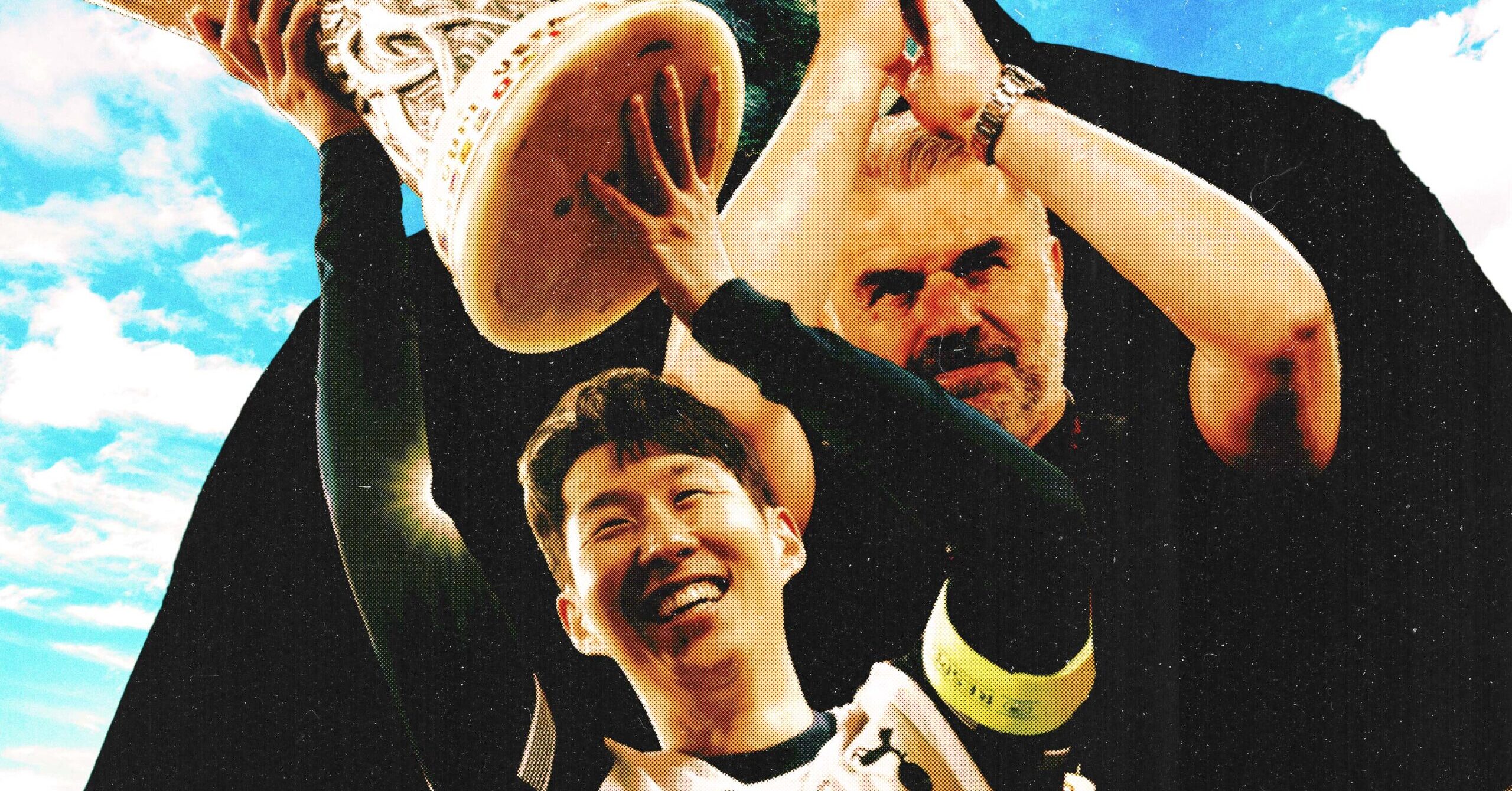
Spurs’ performances throughout this whole Europa League run showed a tactical flexibility and commitment to winning ugly that they haven’t really demonstrated throughout much of Postecoglou’s Premier League tenure. When the team took the winners’ stage last night to lift the trophy, the players called Postecoglou over from the side to join them in the middle of the celebrations. As the Spurs players held up a sign bearing the quote that will go down as one of the ultimate called shots in sporting history, they made it clear that they're still buying in to Postecoglou's message. Two sentences that were mocked and ridiculed for much of the season as Spurs kept losing have now become both a rallying cry and victory lap baked in 17 years of history.

I watched the post-match celebrations soaked in Champagne, beer, and my own sweat alongside a few hundred fellow Philadelphia-based Spurs fans at a watch party. I threw my hands in the air when the camera cut to a smiling Postecoglou holding the trophy, even though I wanted it to be his last meaningful match in charge of the club.

This is now the ultimate battle of process vs. results. In some ways, Levy is in a no-win situation. Sack Postecoglou, and the next guy had better be successful—or else you’ll be remembered for driving out the only coach who won you something. Keep Postecoglou around, only to fire him in the middle of next season? Then you’ve wasted a whole preseason of training as well as a vital transfer window on a coach you were never really committed to. It’s hard to argue with Postecoglou’s results in this competition, but it’s easy to cast doubt on Tottenham’s process and results for the rest of the campaign. Ironically, it’s practically the same scenario their opponents Manchester United found themselves in this past season, and the club was clearly worse off for keeping Erik ten Hag before sacking him in the middle of the season, even though he had won them an FA Cup five months earlier.

In Postecoglou’s defense, it’s fair to say that Spurs haven’t played their best available lineups in the Premier League since the Europa knockouts began on March 6. Would the Premier League situation be less dire if they had dedicated their best resources to that competition? Tottenham was still 13th on March 5, with just 33 points in 27 games. You could also argue that Spurs suffered a severe injury crisis that hampered them throughout much of the season. But Spurs have had injury issues in both years under Postecoglou’s leadership, and some have theorized that they’re correlated with his high-intensity style of play. The severe drop-off in performance when Spurs have played some of their reserves also calls into question the identification and development of talent at the club.

My heart really likes Postecoglou and wants him to succeed. The club will forever be in his debt, and you couldn’t fault him for trying to fix his consistency issues with more money—$100 million extra for qualifying for the Champions League—and a trophy he can flex for potential new signings. Postecoglou has now clearly laid the decision at Levy’s feet with his post-match commentary.

“I’ll be disappointed if I can’t continue here,” Postecoglou said, before adding: “I remember when I signed, the club and even Daniel said, 'We went after winners, it didn't work, and now we've got Ange.' But mate, I'm a winner. I have been a serial winner my whole career.”

On Sunday, Spurs will take a lap of honor and parade their Europa League trophy around Tottenham Hotspur Stadium. The American mind isn’t built to comprehend how a team can finish 17th and simultaneously experience the best club season in almost two decades. History and a larger sample of data tell us that this is probably as good as it’ll get for Postecoglou in North London. It’s fair to argue that he’s earned a second chance; now it’s up to Levy to decide his future with the club.

But before making a decision, maybe Levy should see whether Postecoglou has any bold claims about his third season.

Source

The Most Desperate European Final

Submitted by daniel on
Picture
Remote Image
The Most Desperate European Final - The Ringer
Description

The Europa League final on Wednesday isn’t just a cup final with a major trophy at stake. It’s also a soccer match between two clubs in the midst of existential crises.

Manchester United and Tottenham Hotspur have been almost impossibly bad this season. They’ve languished near the bottom of the English Premier League table, currently in 16th and 17th place, respectively, with one league match to go. Each club is guaranteed to finish with a record-low point total in its Premier League history and its most losses in a single season since the competition began in 1992. In the middle of a lost season, neither team has much of an identity. Both clubs have been searching for one for well over five years now, and each league game that comes and goes seems to move them further from finding that purpose.

But while the questions of purpose, legacy, and identity exist for these clubs right now, a faint glimmer of hope has underscored Manchester United’s and Tottenham’s runs through the Europa League. Both now have a shot at ultimate redemption at the end of an otherwise aimless season. A chance at glory. A get-out-of-jail-free card.

And these teams aren’t just playing for pride or silverware. The winner also qualifies for the Champions League. And with this most unlikely of qualifications comes the ability to recruit better players and alter the financial outlook of the club. The match could also determine the fate of Ange Postecoglou, Tottenham’s worst-ever Premier League manager but also the man who could win Spurs their first trophy since 2008 and their first European silverware in 41 years. For United, it’s a chance to salvage manager Ruben Amorim’s woeful first six months in charge and kick-start the club’s dream of returning to the European elite post–Alex Ferguson.

The dichotomy of the almost comical failures in the Premier League every weekend, while the clubs also do just enough to scrape by in the Thursday Europa League matches, has been a constant whiplash for fans. These are two clubs that might not reach the 40-point threshold that has long been considered the barometer for Premier League safety. In a different year, with a more competitive bottom three, United and Spurs might have been looking over their shoulders at potential relegation—a staggering reality for two members of the Premier League’s so-called “Big Six.” This shouldn’t really be possible given the financial resources at both clubs’ disposal.

There’s a scene in The Dark Knight where the Joker snaps a pool cue in half and informs the mobsters that only one survivor will be joining his team. It’s a bad situation, and it’s about to get a lot worse for whoever fails to get into the 2025-26 Champions League. The winner gets to embrace selective amnesia about how the season went. The loser will depart the San Mamés Stadium in Bilbao, Spain, wearing the stink of their club’s worst season in decades.

The Europa League is no stranger to teams winning the trophy despite a poor league campaign, but the difference has never been this stark. Eintracht Frankfurt won the Europa League in 2022 while finishing 11th in the Bundesliga. Sevilla won it in 2023 despite a 12th-place finish in La Liga. Regardless of what happens on Wednesday, the winner will have the lowest league finish for a Europa League champion ever. The Europa League title is an opportunity for glory and presents some very real advantages for the next season, but it’s not necessarily indicative of anything beyond the cup run itself. In the cases of Frankfurt and Sevilla, they finished seventh and 14th in their respective leagues the year after their triumphs. Amorim more or less alluded to this in a recent press conference when he said, “For me, it doesn’t matter if we win the Europa League, because the problems are much bigger than that.”

For Manchester United, you have to go back to just this time last year, when a 2-1 win in the FA Cup final against rival Manchester City earned United a prized trophy despite a disastrous league campaign. Then-manager Erik ten Hag kept his job in that moment of jubilation, but he didn’t make it three months into the new season before getting sacked. That victory can’t be taken away, but it also probably set in motion this lost 2024-25 league campaign. Spurs are in a nearly identical spot with Postecoglou this year. There was a report in April claiming he is set to depart the club regardless of how the Europa League campaign ends. But if Postecoglou does deliver a victory in Bilbao, would Tottenham really have the gall to sack the manager who won the club its first trophy in 17 years? While Spurs are lumped in with Manchester City, Liverpool, Arsenal, Chelsea, and United in the Big Six because of their financial resources, you wouldn’t know it looking at the club’s recent trophy case. It’s time to get the monkey off Tottenham’s back.

Fairly or unfairly, the Postecoglou era will be defined by one match. If he wins it, he’s a club legend—even if he departs the club after the season. If he loses, Postecoglou’s time at Spurs will go down as one of the worst eras in recent Tottenham history. The margins are that thin.

Postecoglou’s Spurs started as emphatically as possible when he took over in 2023. He arrived with an unwavering belief in attacking at every given opportunity. When Spurs won eight and drew two of his first 10 Premier League matches, Postecoglou had successfully injected life into a club that had spent years trying to recapture the highs that defined the Mauricio Pochettino era from 2014 to 2019.

The honeymoon period ended, though, when Spurs suffered a 4-1 defeat to Chelsea on Monday Night Football in November 2023. Postecoglou has spent the better part of the past 18 months trying to find consistency at the club again. It hasn’t come. Consecutive years of injury crises have left some wondering whether his demanding play style is sustainable over the course of a season. His tactical rigidity has also been questioned. In the expected-goals-allowed table, Spurs finished 14th in his first year at the club. This season, they are 17th. Whether it’s personnel or tactics, Spurs have been well below average defensively and, if anything, are moving in the wrong direction.

Spurs’ week-to-week performances haven’t come close to matching the quality shown in the golden Pochettino years. And yet, Postecoglou has an opportunity on Wednesday to accomplish something that Pochettino, José Mourinho, and Antonio Conte before him could not. To finally put an end to the trophyless run at Tottenham. To end, or at least temporarily put on hold, the “That’s so Spursy” and “Lads, it’s Tottenham” jokes that have followed the club around for years.

Postecoglou also has a chance to make good on a decree he issued before the start of the season and then doubled down on about a month into the campaign. Postecoglou’s past managerial tenures have always resulted in some type of silverware in his second season at the club. As a result, he reminded the press in August, “Usually, in my second season, I win things.” Following a 1-0 loss to Arsenal in the North London derby in September, a reporter asked Postecoglou if he felt Spurs were on track to continue his year-two tradition.

“I’ll correct myself. I don’t usually win things—I always win things in my second year,” Postecoglou said. “Nothing’s changed. I’ve said it now. I don’t say things unless I believe them."

The unstoppable force—Ange’s success in year two—was officially placed on a collision course with an immovable object: Spurs’ trophy drought. Two outcomes that could not both be true at the same time. Postecoglou had basically pushed all of his chips into the center of the table, and by February, the Europa League became the top priority to win that bet. Ange was all in, and the recent changes in the competition’s format also helped him get closer to achieving that goal.

In the past, eight Champions League teams that failed to make the final 16 of the competition would drop down into the Europa League bracket. Across the last two seasons prior to the format change, that meant that major players like Juventus, Barcelona, and AC Milan all dropped down to add more depth to the second-tier competition. But since the Champions League expanded from 32 teams to 36 in 2024-25 and abandoned the traditional group stage format, the 36 teams that begin the Europa League are the only teams eligible to win the competition. This year, the drop-down teams would have included Manchester City and Juventus. Without them, Spurs and United were priced by oddsmakers as two of the three favorites when the knockout rounds began. We shouldn’t be shocked to see these two here, yet it feels almost miraculous. It’s a weaker field as a result of the changes, but the Champions League reward helps the competition retain its prestige.

A club with the stature of Manchester United expects to be playing in the Champions League. United isn’t starved for trophies in the same way as their opponent, but they’ve been one of the most poorly run clubs at the top of the football pyramid for nearly a decade. In addition to their FA Cup victory last year, the club won the Carabao Cup in 2023 and the Europa League in 2017. But since hiring Amorim to replace ten Hag in November, United have seven league wins in 28 matches. Four of those seven wins are against the three relegated teams. Amorim doesn’t have the personnel to properly execute his ideal system—the lack of attacking wing backs has been problematic all year—but will United commit a ton of financial resources so this manager can rebuild the squad in his image following a rocky first 29 league games?

Amorim’s positioning at United for the short and medium term hinges strongly on Wednesday night. If United loses, they’ll miss out on a potential 85 million pounds (roughly $113 million) in European revenue next year. The club has been tightening its belt considerably this season to try to rein in spending. They also haven’t missed out on European football completely in any season since 2014-15. It’s a domino effect. If United aren’t in Europe, they don’t have the revenues to justify spending heavily this summer. And any hope of the club’s aura attracting players dissipates if they’re absent from the continent’s top competition.

While last season’s issues primarily revolved around a porous defense under ten Hag, the lack of goals for United this year is alarming. They’ve spent a lot of money on attacking players like Rasmus Hojlund, Joshua Zirkzee, and Antony in the past three seasons, yet they are 16th in the Premier League in goals scored. Much of their creative output is solely reliant on Bruno Fernandes, and the lack of production around him has led to just 42 league goals in 37 matches. (The top six teams in the league, by contrast, have scored at least 58 goals.)

It’s hard to make the case for either team actually winning this match, given how much losing both have done this year. It may come down to who loses it less. Spurs didn’t exactly run through a gauntlet to reach the final, beating fifth-place Dutch team AZ Alkmaar, Eintracht Frankfurt, and Cinderella Norwegian side Bodo/Glimt in their three knockout ties. United haven’t lost a match in the entire competition, but they’re only here following a spectacular two-goal, extra-time comeback in the final minutes of their quarterfinal against Lyon, a sixth-placed French team.

Spurs’ two most important creative midfielders—Dejan Kulusevski and James Maddison—will not play in the final due to injuries. The 19-year-old standout midfielder, Lucas Bergvall, is also unlikely to feature. When you compare this to United’s improving health situation with the recent return of Amad Diallo, you could tip the scales in favor of United.

However, Spurs’ lackluster metrics have been somewhat tied to injuries to their top center back pairing. When Cristian Romero and Micky van de Ven are both fit, as they are now, Spurs are considerably better at progressing the ball forward and covering space behind their high line. There are also the head-to-head results between these two teams. United have really struggled to handle Spurs’ press all year long. Spurs beat them 3-0 in a dominant win at Old Trafford before ten Hag’s firing. Since Amorim took over, Spurs beat them 4-3 in December in the Carabao Cup quarterfinals (the highlights of that match are worth watching for the comedic goalkeeping displays), and then Spurs won 1-0 in February when both clubs were in the midst of brutal injury crises. The oddsmakers make United a small favorite in Bilbao because they’re healthier, but I’d be wary of anyone who has confident opinions on who will avoid defeat on Wednesday.

As fans, we’re all chasing the euphoria of reaching the summit and winning a final like this. The game is ultimately about glory. But this particular summit is more like reaching the base camp than actually climbing Mount Everest. It’s a fleeting victory that could cloud the view of where both clubs currently are in the search for bigger trophies and more consistent results.

Source